
Last updated October 15, 2026
 Whole-home duct cleaning
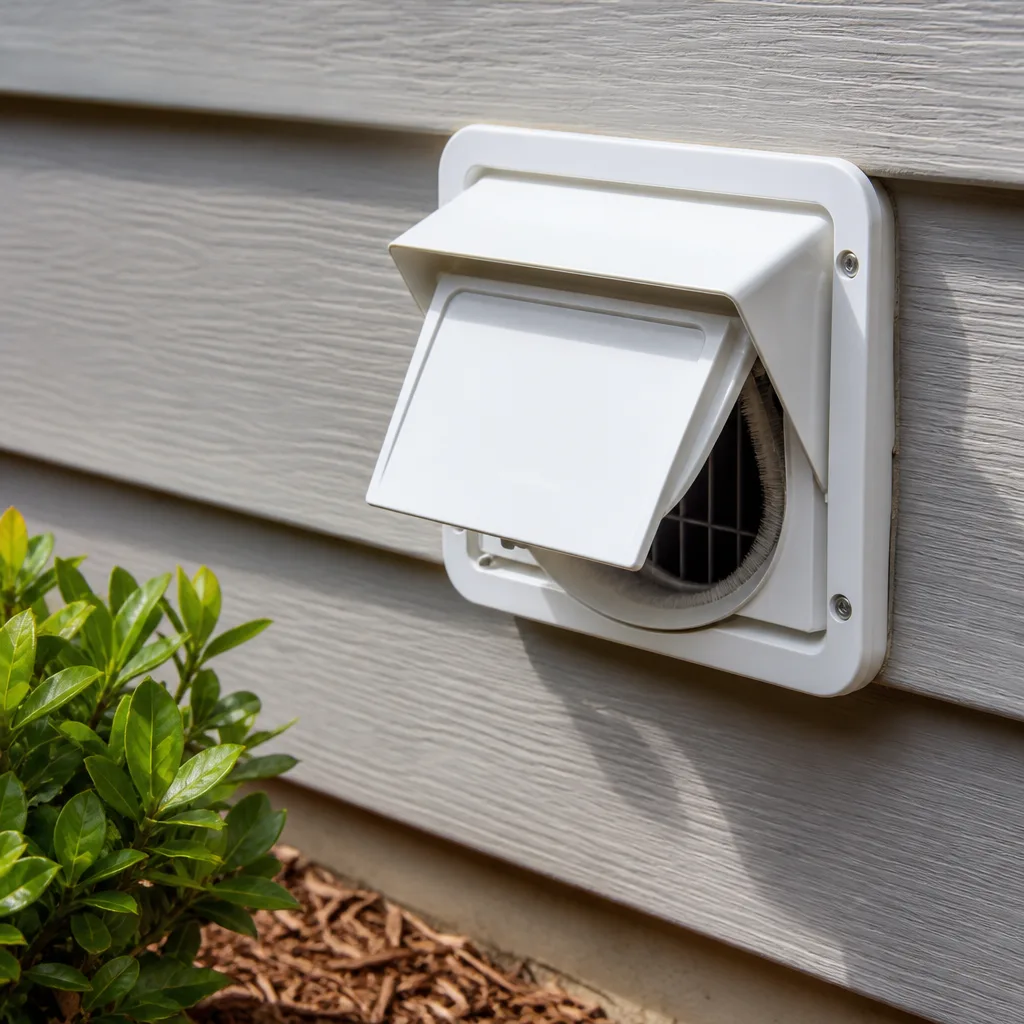 Dryer vent cleaning
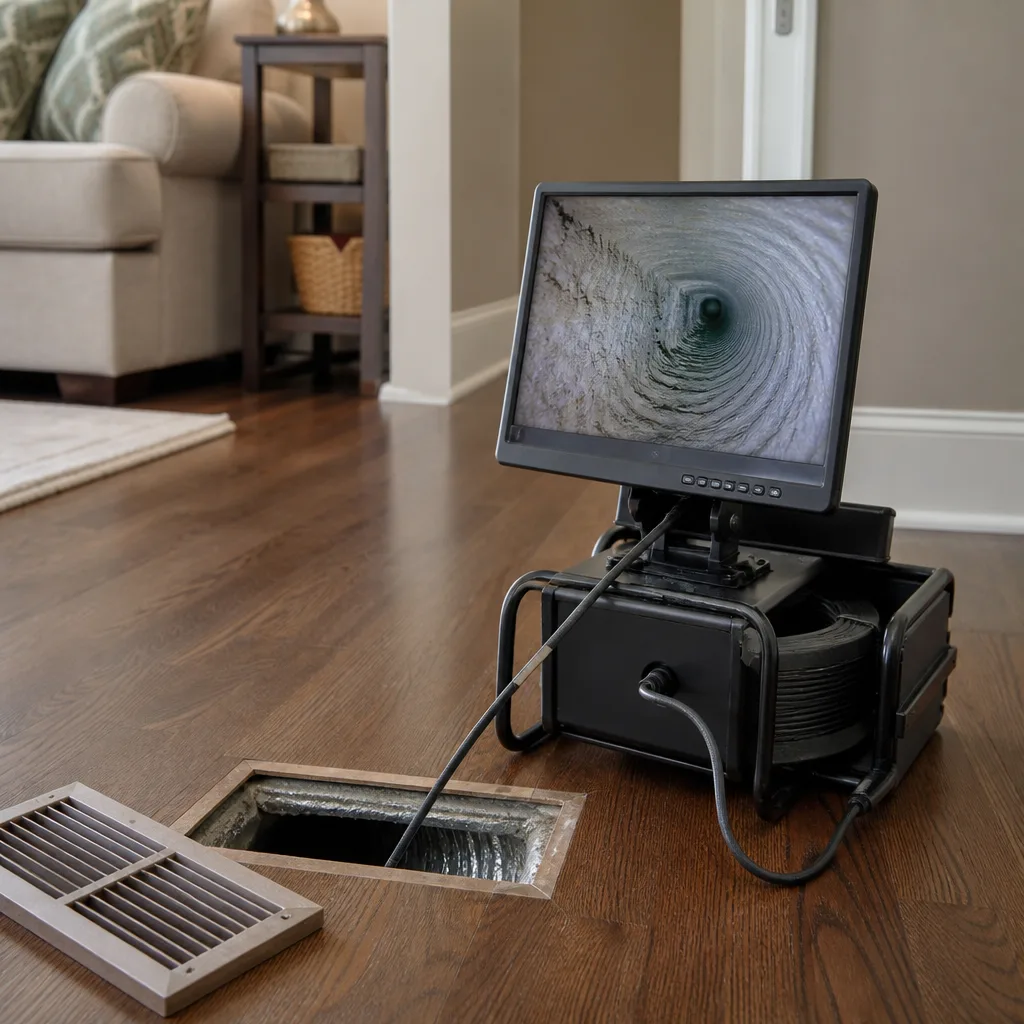 Camera inspection
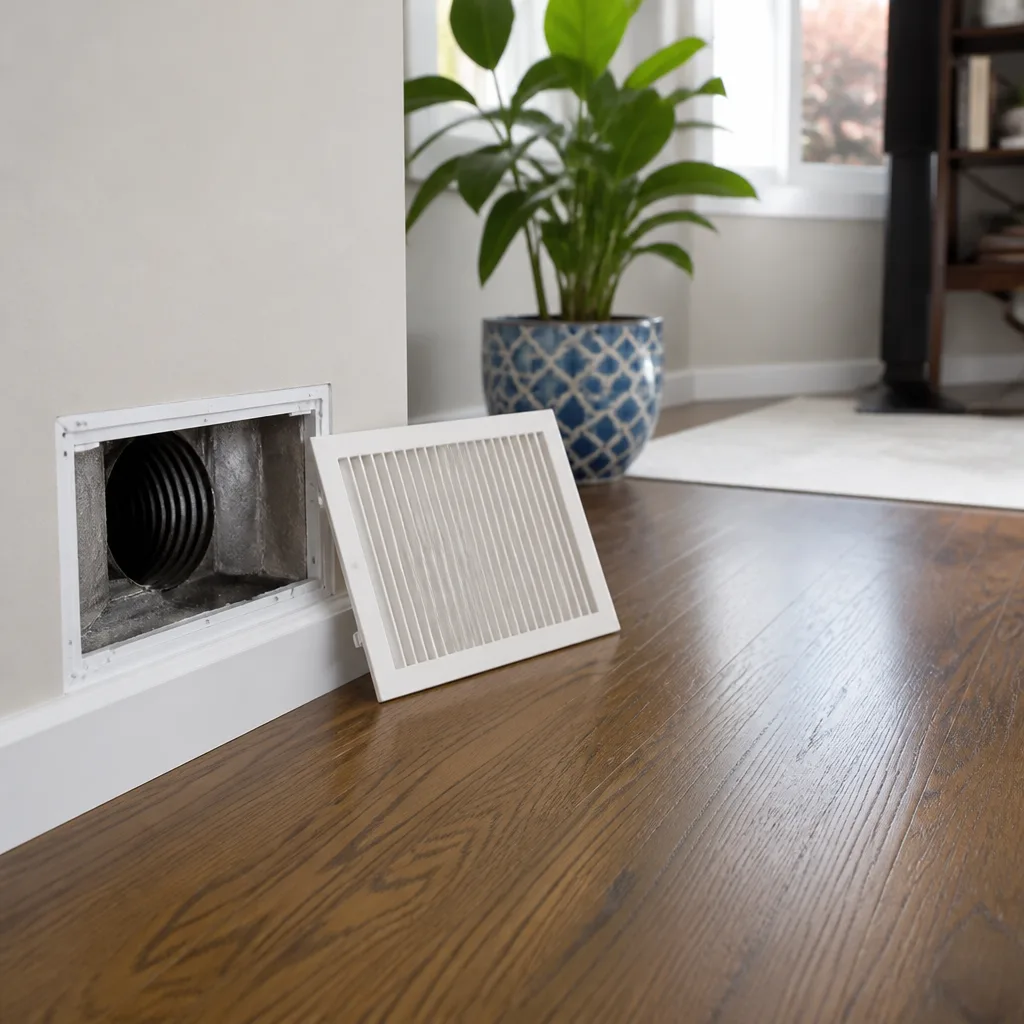 Sanitizing & deodorizing
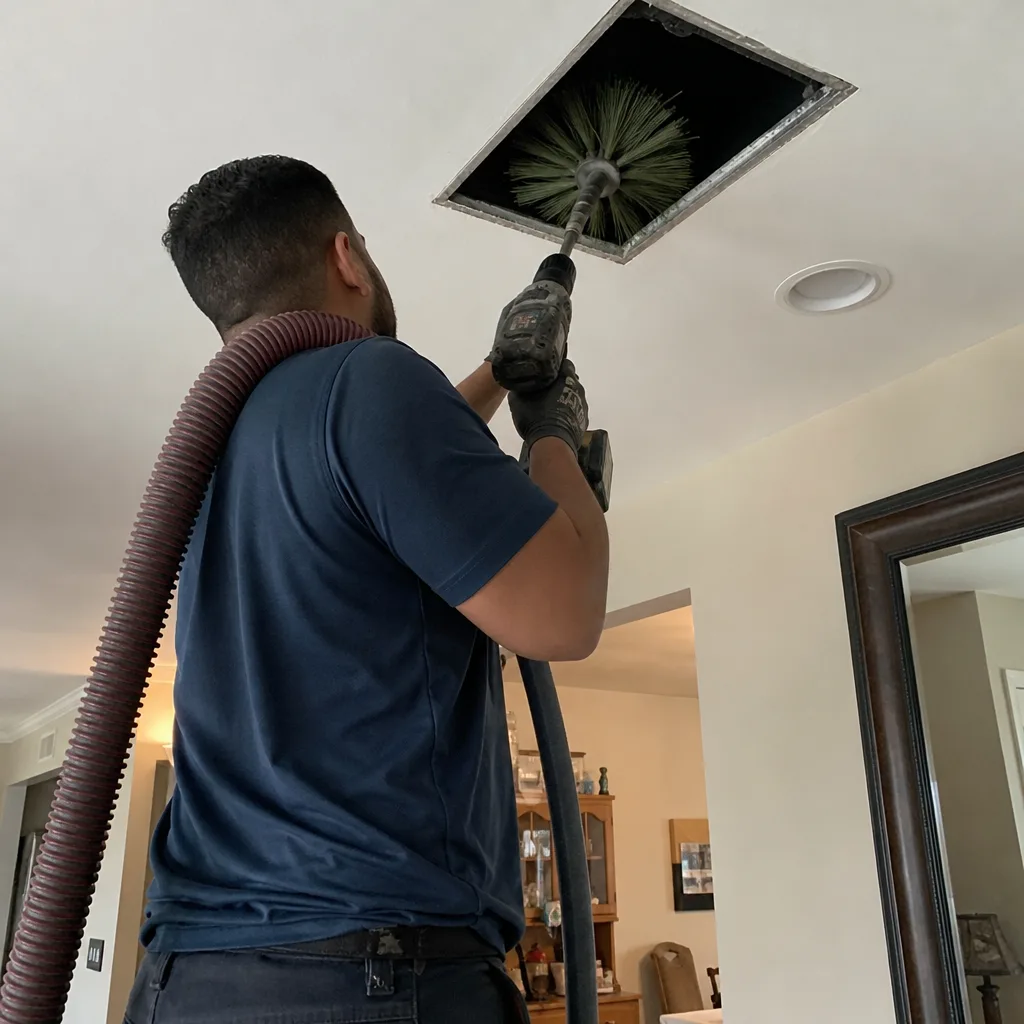
Whole-system duct and dryer vent check with before-and-after photos - you see exactly what came out of your vents
That "$99 whole-house special" is a bait ad - the real number appears once they are in your hallway, or the "clean" is a shop-vac at the register. We photograph the inside of your ducts before and after instead.
Air Duct Cleaning Warning Signs: A Fort Lauderdale Homeowner’s Reference Guide
A Fort Lauderdale HVAC system running 10 to 15 percent longer cycles to hit the same thermostat setpoint is often flagging restricted airflow from duct contamination. But most homeowners, and even some technicians, point the finger at refrigerant charge or equipment age before they ever look inside the ducts. The truth is that in South Florida’s heat and humidity, the earliest warning signs of duct trouble rarely show up as a puff of dust from a register. They hide in your FPL bill, in the way one bedroom feels different from the next, and in a drain pan you can inspect yourself in under two minutes. This guide walks through those early indicators, room by room and system by system, so you know what actually matters before you spend a dime.
Styles & brands we work with
Quick Answer
The earliest warning signs of air duct problems in Fort Lauderdale homes are longer HVAC run times to reach the same setpoint, an FPL bill that climbs outside normal seasonal patterns without a rate increase, and room-to-room humidity differences that persist for weeks. Visible dust at registers usually shows up later, after airflow restriction, moisture intrusion, or duct leaks have already been costing you money for months. If you’ve noticed two or more of the early signs below, scheduling Air Duct Cleaning services with a professional inspection using negative-air equipment is the next step.
Table of Contents
- How to Read Your FPL Bill as a Duct Health Indicator
- Room-Specific Humidity Imbalances: The Sign Most People Miss
- Odor Profiles: What Different Smells Tell You About Duct Contamination
- The Coil Drain Pan Check: A Two-Minute Inspection That Flags Trouble Early
- Fort Lauderdale Housing Stock: CBS Construction, Flex Duct, and Slab-Mounted Handlers
- When Dust Finally Shows Up: Reading the Registers
- The Energy Math: What a Restricted Duct System Costs You Monthly
- Common Mistakes to Avoid
- When to Call a Professional
- Frequently Asked Questions
- The Bottom Line
How to Read Your FPL Bill as a Duct Health Indicator
Your FPL bill tells a story if you know how to read it. South Florida electric rates do shift seasonally, and summer bills always run higher than winter bills. That’s normal. What isn’t normal is a jump of 12 to 18 percent year-over-year for the same billing month, with no rate change and no major lifestyle shift, that holds for two consecutive months. That pattern, repeated across a Fort Lauderdale summer, often points to an HVAC system working harder than it should. And in many homes we inspect, the root cause isn’t the condenser or the thermostat. It’s a duct system that has built up enough internal restriction to choke airflow.
Here’s how to separate signal from noise on your bill:
- Compare same-month usage, not month-to-month. July 2025 against July 2024, not July against June. Month-to-month jumps are weather. Same-month jumps that repeat are a system problem.
- Watch the kWh, not just the dollar total. Rates fluctuate. Kilowatt-hours tell you whether the house is actually consuming more energy.
- Look for a flattening of the typical curve. If your spring and fall shoulder-season bills start creeping closer to summer peaks, the system is losing efficiency in mild weather too, which is a classic duct restriction or leak pattern.
- Check runtime indirectly. If your thermostat tracks runtime, compare hours per day at the same outdoor temperature. A dirty or leaking duct system adds 30 to 90 minutes of daily runtime in Florida peak cooling months.
A well-sealed, clean duct system in Fort Lauderdale should not produce wild swings in same-month energy use year after year. When we walk a home and the homeowner has two years of FPL bills showing a steady same-month climb, we usually find one of three things: a torn flex duct in the attic pulling 140-degree air into the return side, a return plenum that’s pulling humid garage or attic air, or a duct interior loaded with enough debris to cut effective diameter by a third. All three are fixable. None of them fix themselves.
Room-Specific Humidity Imbalances: The Sign Most People Miss
One bedroom that always feels muggier than the rest of the house is not a thermostat problem. Thermostats measure temperature at one location, usually a hallway or the main living area. They do not measure humidity per room. When a single room in a Fort Lauderdale home consistently runs 8 to 12 percent higher relative humidity than the rest of the house, something is wrong with the air delivery or return path to that room. And more often than not, the something is a compromised duct section serving that space.
Here’s what we look for when a homeowner reports a “muggy back bedroom” on a duct inspection:
- Crushed or collapsed flex duct. Older flex duct, especially the 1970s to 1990s runs found in many Fort Lauderdale homes, sags, kinks, or gets pinched by attic storage or new wiring. A crushed run delivers weak airflow, which means less dehumidification, which means that room sits muggier.
- A disconnected boot or joint. If a duct has pulled off a register boot or a wye fitting inside the attic, conditioned air dumps into the attic instead of the room. The room gets warm and sticky while the attic gets cold and damp. That attic condensation is its own problem.
- A blocked or undersized return. If a room gets supply air but has no way to return air to the handler, pressure builds and airflow stalls. Humidity climbs. This is common in older Fort Lauderdale homes where a bedroom return was never installed or was covered by furniture.
- Internal duct lining degradation. Duct board or internally lined sheet metal can shed fibers or collect mold growth. The surface friction changes airflow and the biological growth releases moisture into the airstream.
If you’ve got a room that consistently feels different from the rest of the house, run a simple test: note the supply register airflow in that room compared to a comfortable room. Hold a tissue near each register with the system running. Weak or uneven airflow in the problem room confirms the restriction. Then call us for a proper diagnosis. We map static pressure, inspect the run, and tell you what’s wrong before we ever talk about cleaning. For broader context on how we approach the whole system, see our page on Air Duct Cleaning in Fort Lauderdale.
Odor Profiles: What Different Smells Tell You About Duct Contamination
Duct smells are specific. A trained nose can separate the three odor profiles common to South Florida ductwork, and each one points to a different root cause. What you smell when the blower first kicks on, or when you stand directly over a supply register, tells you more than a visual inspection of the first three feet of duct. The air handler is downstream of everything, so whatever the duct system contains gets pushed into your living space.
Musty-Damp: Moisture and Microbial Growth
A musty, earthy, damp smell that intensifies when the AC cycles on points to moisture inside the duct system or the air handler cabinet. In Fort Lauderdale’s climate, the dew point sits above 70 degrees for most of the year. Any gap in duct insulation, any warm humid air pulled into the return side, any standing water in the drain pan, creates the exact conditions for mold and mildew growth on duct surfaces, insulation, and the evaporator coil itself. This smell does not go away with a filter change. It comes from the duct lining and coil surfaces.
Burning Particulate: Debris Near the Heat Source
If you run a heat pump or electric strip heat and catch a sharp, dusty, almost electrical burning odor on the first cold snap, that’s the smell of accumulated debris incinerating off the heat strips or heat exchanger. In Fort Lauderdale, many systems sit in cooling mode for ten months, collect dust and skin cells and insulation fibers around the heat strips, and then burn it off on the first cold morning. The smell is brief, but it tells you the air handler is carrying debris that belongs in a vacuum, not on a heating element. In our experience, this is one of the most commonly ignored warning signs in Fort Lauderdale homes.
Salt-Chemical: Coastal Corrosion and Coil Degradation
A sharp, almost chemical or salt-tinged odor from registers can indicate corrosion inside the air handler or duct components. Fort Lauderdale sits on the Atlantic. Salt-laden air accelerates corrosion on evaporator coils, drain pans, and any exposed metal in the duct system, especially in homes east of Federal Highway or within two miles of the beach. Corroded coil surfaces can hold biological growth and produce byproducts that smell wrong. This odor profile is less common than musty or burning, but it’s much more common in coastal Fort Lauderdale than inland Broward neighborhoods.
One important note: smell alone cannot identify mold species or confirm biological contamination. It tells you there’s a moisture or debris problem inside the system. A proper diagnosis requires opening inspection access panels and looking at the coil, pan, and duct interior. For a deeper look at what professional cleaning actually removes, see Hollis Air Duct Fort Lauderdale home.
The Coil Drain Pan Check: A Two-Minute Inspection That Flags Trouble Early
Every homeowner should know how to check their coil drain pan. It’s the single most underrated diagnostic step in HVAC maintenance, and it takes two minutes during a standard filter change. Your air handler, whether it’s in a closet, garage, or attic, has a drain pan under the evaporator coil. That pan catches condensation. What you find in that pan tells you what’s happening upstream and downstream in your duct system.
Here’s the step-by-step inspection we walk our Fort Lauderdale customers through:
- Turn off the system at the thermostat. Do not reach into an air handler cabinet with the blower running.
- Locate the access panel. The evaporator coil sits above or beside the blower. The drain pan is directly underneath it.
- Look for standing water. Some water in the pan is normal during operation. Water that sits for days after the system cycles off means the drain line is partially clogged or the pan is sloped wrong. That standing water breeds microbial growth that gets drawn into the ductwork.
- Check for sludge or scum. A dark, slimy film on the pan surface is organic material feeding off dust and moisture. It travels. It grows. It’s one of the primary sources of that musty register smell.
- Look for rust or corrosion. Pin holes, white scale, or reddish staining tell you the pan is aging. A corroded pan will eventually leak into the cabinet and then into the duct board or the ceiling below.
- Check the drain line opening. If it’s blocked with debris or mold, water backs up and the pan overflows. This is the most common cause of water damage around air handlers in Fort Lauderdale homes.
The coil pan is the canary in the coal mine for moisture problems. If the pan is dirty, the coil above it is almost certainly dirty too. And a dirty coil runs inefficient, produces condensation that doesn’t drain properly, and throws humidity back into the air stream. That humidity ends up in your ducts, where it feeds duct surface mold. The whole chain starts with two minutes at the pan.
Fort Lauderdale Housing Stock: CBS Construction, Flex Duct, and Slab-Mounted Handlers
Fort Lauderdale’s housing stock has failure modes you won’t find in most national duct cleaning guides. The city is dominated by concrete block construction, known locally as CBS, built in waves from the 1950s through the 1980s. Thousands of these homes still run their original duct systems. And those systems fail in predictable, local ways that a homeowner in Minnesota or Arizona never deals with.
The 1970s and 1980s Flex Duct Problem
Older CBS homes in neighborhoods like Victoria Park, Coral Ridge, and Harbordale frequently still have flex duct runs installed during the original build forty or fifty years ago. Flex duct has a lifespan. The inner liner delaminates, the insulation compresses, the outer jacket tears, and connections pull apart. In a Fort Lauderdale attic that hits 120 degrees in July, that degradation accelerates dramatically. We’ve pulled flex duct out of attics that crumbled to the touch. The homeowner had been cooling their attic through a dozen small tears for years before noticing.
Slab-Mounted Air Handlers and In-Slab Duct Runs
A significant number of older Fort Lauderdale homes were built with the air handler mounted directly on the concrete slab, sometimes in a closet, sometimes in a utility room, with supply ducts running through the slab itself. In-slab ducting was common in the 1960s and 1970s. Over time, groundwater intrusion, slab cracks, and general South Florida moisture can compromise those ducts. They fill with dirt, water, and debris. They’re nearly impossible to clean properly without addressing the slab. If your Fort Lauderdale home has original in-slab ducting, you need a straight answer about what’s salvageable and what isn’t.
Attic-Mounted Handlers in Ranch and Split-Level CBS Homes
Many 1960s-era CBS ranches in Fort Lauderdale have attic-mounted air handlers with duct runs draped over trusses. The Florida heat degrades plastic flex duct in those attics faster than almost anywhere else in the country. UV exposure through roof vents, extreme thermal cycling, and the relentless humidity all take a toll. We find collapsed runs, pinched runs under newer wiring, and runs that have been chewed by rodents. Rodent entry into attic ducting is a real issue in older Fort Lauderdale neighborhoods with mature tree canopies, including Sailboat Bend and Riverside Park.
The point is straightforward: what your ducts need depends on how your house was built, when it was built, and what’s happened in the attic since. A guide written for new construction in Texas doesn’t tell you what you need to know about a 1975 CBS home in Victoria Park. Our inspections always start with the house itself. If you’re considering a full duct sealing job, see Duct Sealing in Fort Lauderdale for details on how we approach it.
When Dust Finally Shows Up: Reading the Registers
Visible dust at registers is the warning sign everyone knows, but it’s actually a late-stage indicator. By the time dust is visibly puffing out of a supply vent, the duct interior has built up enough loose material to become a consistent source. Here’s how to read what you’re seeing, because not all dust means the same thing.
- Fine gray dust accumulating quickly on register louvers. This is often insulation breakdown from the duct interior or attic insulation being pulled into the return side. It’s fine, it’s consistent, and it coats everything in the room at the same rate.
- Dark, chunky debris around a specific register. This points to contamination near that specific run. It could be rodent droppings, attic debris pulled through a tear, or degraded flex liner from that particular section.
- Dust that appears only when the system first starts. This suggests settled material inside the plenum or the first few feet of supply trunk. Once the airstream starts moving, that debris blasts out into the room and then clears.
- Dust lines on walls or ceilings near registers. If you see streaking or staining on the wall above or around a supply register, that’s particulate building up in the airstream. It usually means the duct interior has a significant contamination load.
- Flakes or particles that look like pepper. This can be rodent debris or mold fragments drying and breaking loose from the duct lining. Either way, it’s not normal dust.
One crucial distinction: the dust you see on furniture is not primarily from your ducts. Most visible house dust is dead skin cells, fabric fibers, and outdoor particulate that comes in through doors and windows. Duct dust shows up differently, concentrated around registers, streaking walls, and reappearing within days of a thorough cleaning. If you clean a room thoroughly and the register area looks dirty again inside a week, the duct system is actively depositing material into that room.
The Energy Math: What a Restricted Duct System Costs You Monthly
Numbers help. A clean, well-sealed duct system in a Fort Lauderdale home should deliver roughly 400 CFM per ton of cooling. A restricted or leaking system might deliver 320 CFM or less. The system compensates with longer run times, which burns electricity, which shows up on the FPL bill. Here’s a practical breakdown of what duct problems actually cost.
- A 10 percent airflow reduction increases energy use by roughly 6 to 8 percent for the same cooling output. On a $250 summer electric bill, that’s $15 to $20 per month, during the months that matter most.
- A 20 percent airflow reduction pushes energy use up 12 to 15 percent. That’s $30 to $40 per month in peak season.
- A return leak pulling attic air at 130 degrees into the system can add 15 to 25 percent to cooling costs, because the coil is now trying to cool air that’s 20 to 30 degrees hotter than the house air you think it’s cooling.
- A duct tear dumping 15 percent of conditioned air into the attic adds roughly 10 to 12 percent to cooling costs, and it also humidifies the attic, which accelerates mold growth on roof sheathing and duct exterior.
Across a full Florida cooling season, which in Fort Lauderdale runs from roughly March through November, a severely compromised duct system can cost homeowners $400 to $800 in wasted electricity. That’s before we talk about the repair cost of the water damage, mold remediation, or coil replacement that often follows. When we show a customer the math on their own bill and their own system, the first question is usually the same: how did I not see this sooner? The answer is that duct problems hide in the attic, in the chase, and in the slab. They don’t announce themselves until the secondary damage starts.
Common Mistakes to Avoid
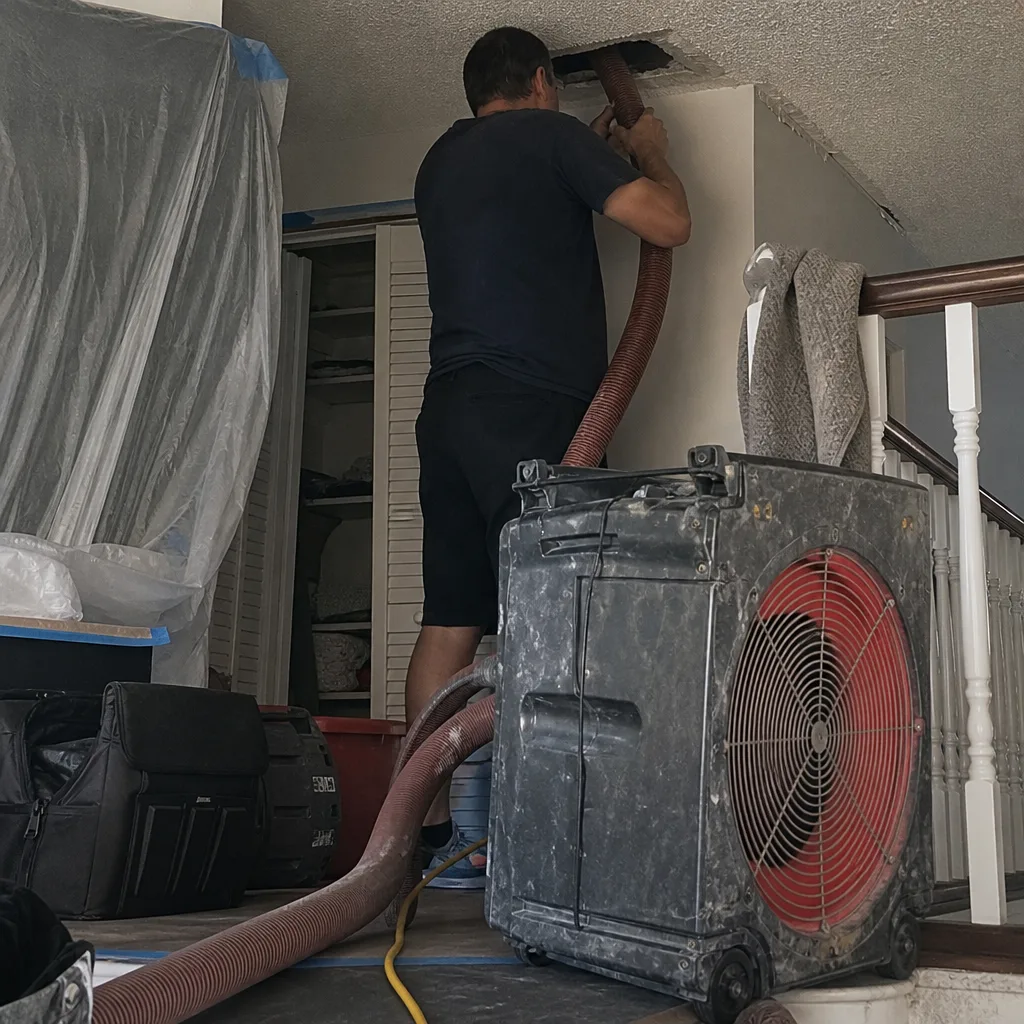
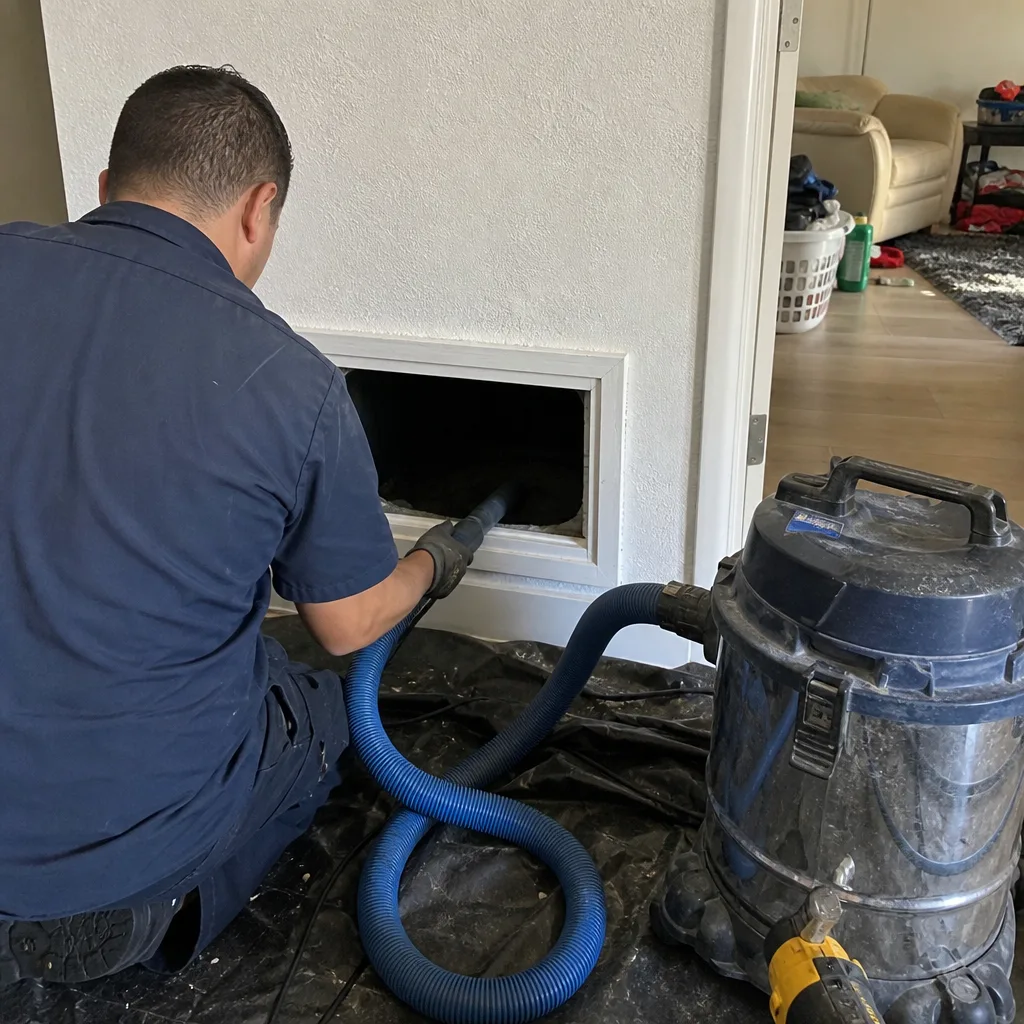
- Assuming every duct cleaning company uses the same method. They don’t. Many operate with a handheld brush and a shop vac. The negative-air method, using equipment from manufacturers like Rotobrush and Nikro, pressurizes the duct while pulling material out. Ask what method a company uses before you book any cleaning in Fort Lauderdale. If they can’t answer in thirty seconds, call someone else.
- Waiting until you see dust to take action. Dust is the last sign to appear. By then, the system has been running inefficient for months. The earlier signs are the energy bill pattern, the muggy room, the musty register smell.
- Changing the filter and assuming the problem is solved. A standard one-inch filter catches large particulates. It does not clean your ducts. If the duct interior and coil are loaded, a new filter is just a clean net over a dirty river.
- Believing a low-price coupon represents the full cost. This trade has a bait-and-switch reputation for a reason. A $49 “whole house special” turns into a $600 invoice once the technician has the van in the driveway and starts finding “problems.” We don’t play that game. Our price is written down before work starts, and it doesn’t move at the door.
- Ignoring the return side of the system. Many Fort Lauderdale homes have undersized or poorly located return ducts. Supply and return have to balance. A return restriction hurts airflow just as much as a dirty supply line.
- Believing that duct cleaning is optional maintenance forever. It isn’t. In Fort Lauderdale’s climate, moisture, humidity, dust, and coastal air all work against the inside of your ducts. Most systems benefit from a professional cleaning every 3 to 5 years, and some from more frequent attention, especially homes with pets, recent renovations, or duct damage history.
When to Call a Professional
Call when you’ve spotted two or more of the early warning signs: a same-month FPL bill increase that persists for two months, a room that stays muggier than the rest of the house, a musty or burning smell from specific registers, or a drain pan that shows sludge when you check it. Call when you’ve had a renovation and can see drywall dust or construction debris on register interiors. Call when you’ve just bought a Fort Lauderdale home and the duct system is original to the house. And call before the problem compounds into water damage or coil failure, because those repairs cost more than a cleaning by an order of magnitude.
Hollis Air Duct Fort Lauderdale offers free estimates in Fort Lauderdale. Call (754) 354-3644 and you’ll talk to a live person who can answer questions about methods, pricing, and what to expect. No pressure. No moving targets.
Frequently Asked Questions
Whole-system air duct cleaning in Fort Lauderdale typically runs between $450 and $900 for a single-system home, with multi-system homes or larger square footage falling in the $700 to $1,400 range. Prices vary by system size, access difficulty, and contamination level. At Hollis Air Duct Fort Lauderdale, the price is written down before any work starts and it does not change at the door. Call (754) 354-3644 for a specific quote on your system.
Cheap quotes usually mean a cheap method: a handheld brush and a shop vac, no negative-air containment, and no real cleaning of the full trunk line and branches. Some low-price operators also use the quote as a foot in the door and then upcharge once they’re inside. A legitimate negative-air cleaning with professional-grade equipment costs real money because the equipment, the training, and the time all cost real money.
Ask for photo documentation before and after, specifically of the coil, the drain pan, the plenum interior, and representative branch ducts. A reputable company will show you the work. At Hollis, we document what we found and what we removed. If a company refuses to provide photos or gets defensive about it, that tells you what you need to know.
Most Fort Lauderdale homes benefit from professional duct cleaning every 3 to 5 years. Homes with multiple pets, smokers, recent renovations, or chronic dust problems may need cleaning more frequently. Homes with older flex duct or slab-mounted handlers should have a professional inspection sooner, regardless of how recently a cleaning was done, because the deterioration of the duct material itself matters more than the debris load.
Sometimes, but not always. If the humidity problem is caused by debris restricting airflow, cleaning restores airflow and the room dehumidifies better. If the problem is a crushed flex run, a disconnected boot, or an undersized return, cleaning alone won’t fix it. That’s why we diagnose before we clean. The humidity imbalance has a physical cause, and the fix has to match the cause.
Newer construction in Fort Lauderdale often has construction debris inside the duct system, including drywall dust, sawdust, and even soda cans and fast food wrappers from the build crew. Builders don’t always clean ducts before the first occupant moves in. A professional cleaning in the first or second year of ownership removes that debris before it cycles through the system and settles into the coil and blower.
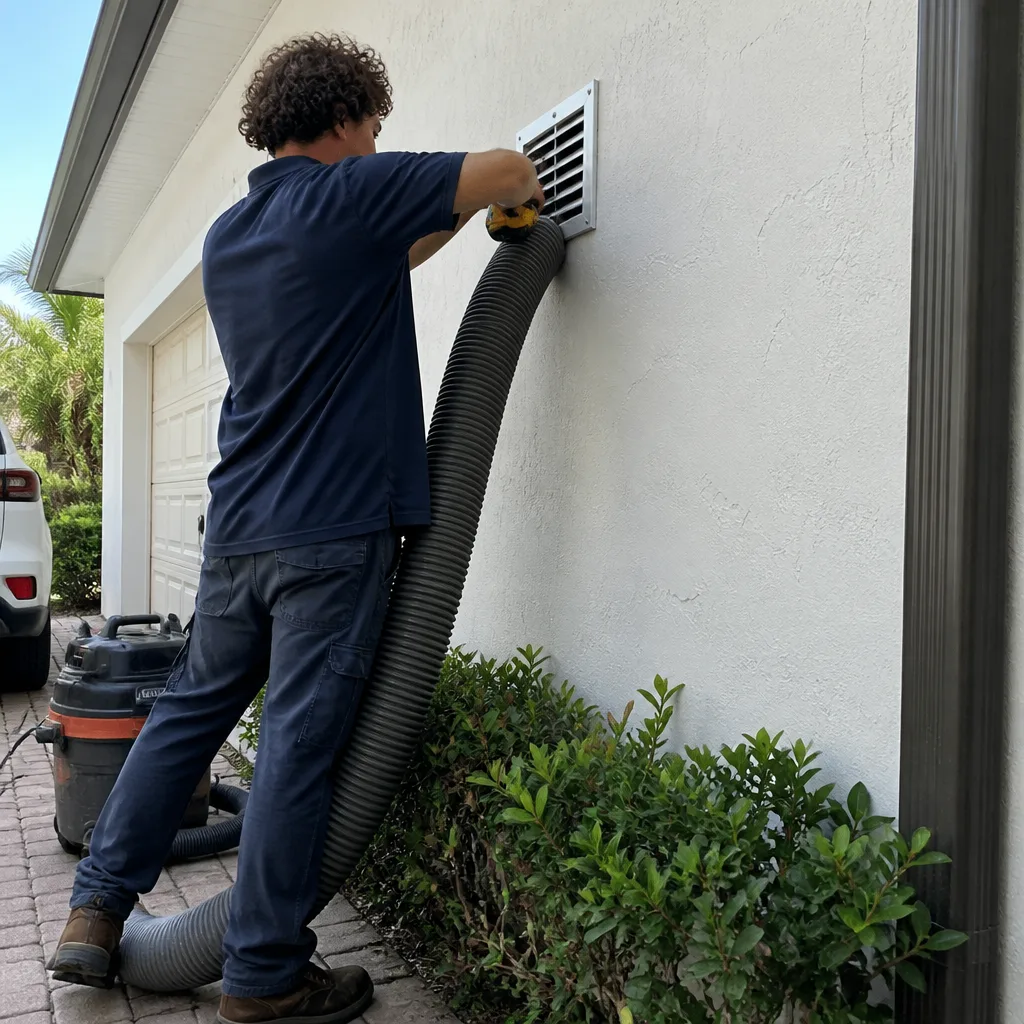
Yes. We provide professional Dryer Vent Cleaning in Fort Lauderdale using the same written-price, written-guarantee standard we apply to every air duct job. Clogged dryer vents are a fire hazard, and in Fort Lauderdale’s humid air, lint clogs accumulate moisture and get sticky, which makes them worse faster.
The Bottom Line
Fort Lauderdale homes put unique stress on duct systems. The humidity, the heat, the salt air, and the age of the housing stock all conspire against clean, efficient airflow. But the signs are readable if you know where to look. Your FPL bill will tell you when same-month usage is climbing without a rate increase. Your rooms will tell you when one space isn’t getting the air it needs. Your nose will tell you when mold, debris, or corrosion has taken hold. And your drain pan will tell you when moisture problems are brewing before they migrate anywhere else. Learn to read those signs and you’ll catch duct trouble before it costs you real money, both in wasted electricity and in secondary damage to the home itself.
Written by Roy Castellanos, Owner at Hollis Air Duct Fort Lauderdale, serving Fort Lauderdale since 2004.
See the difference
 Before
 After
After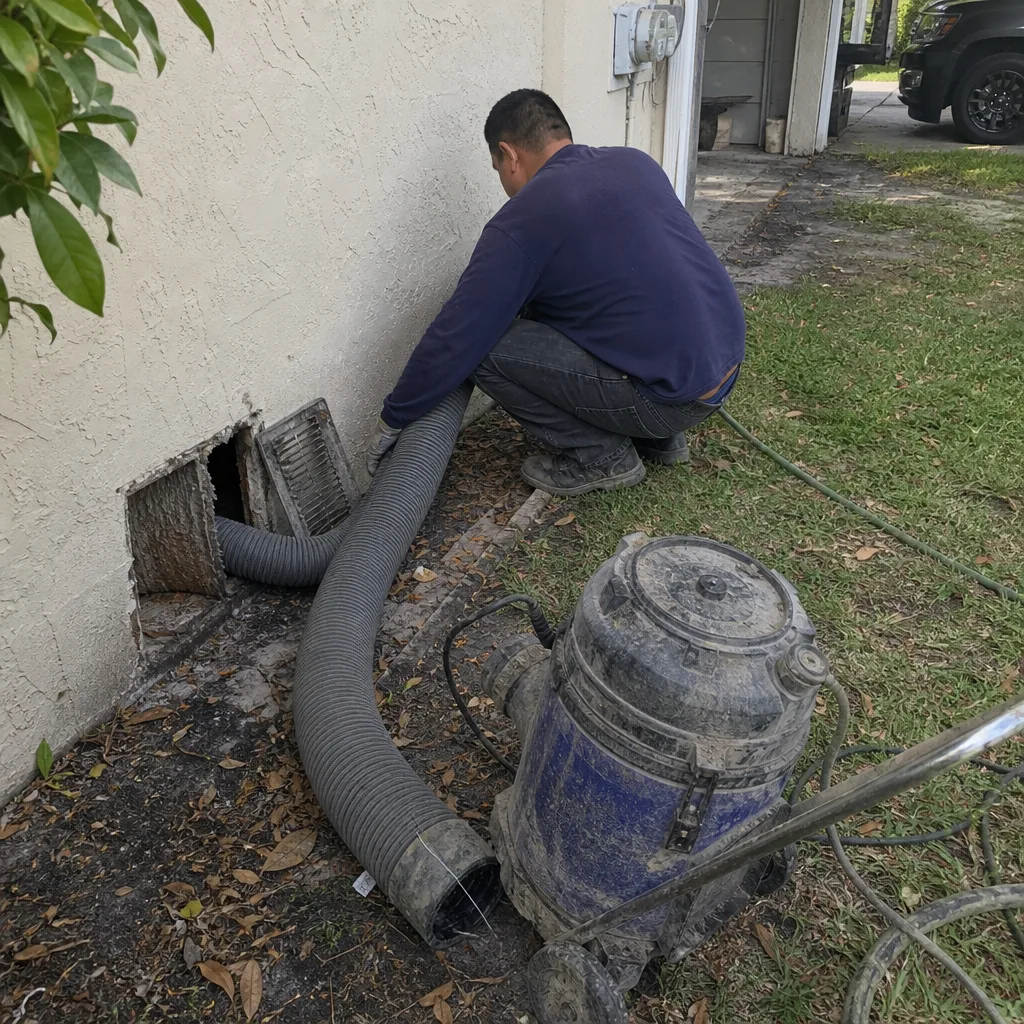 Before
 After
After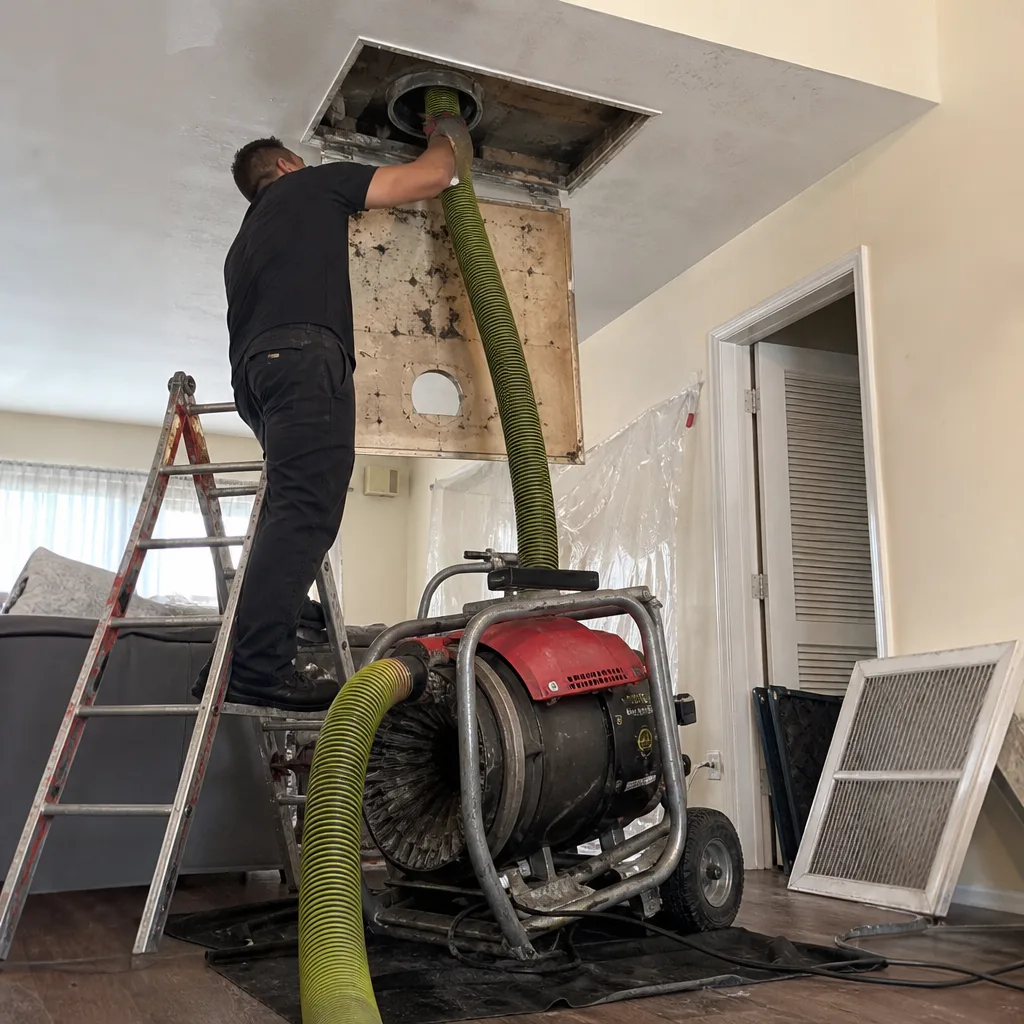 Before
 After
After