
Last updated October 15, 2026
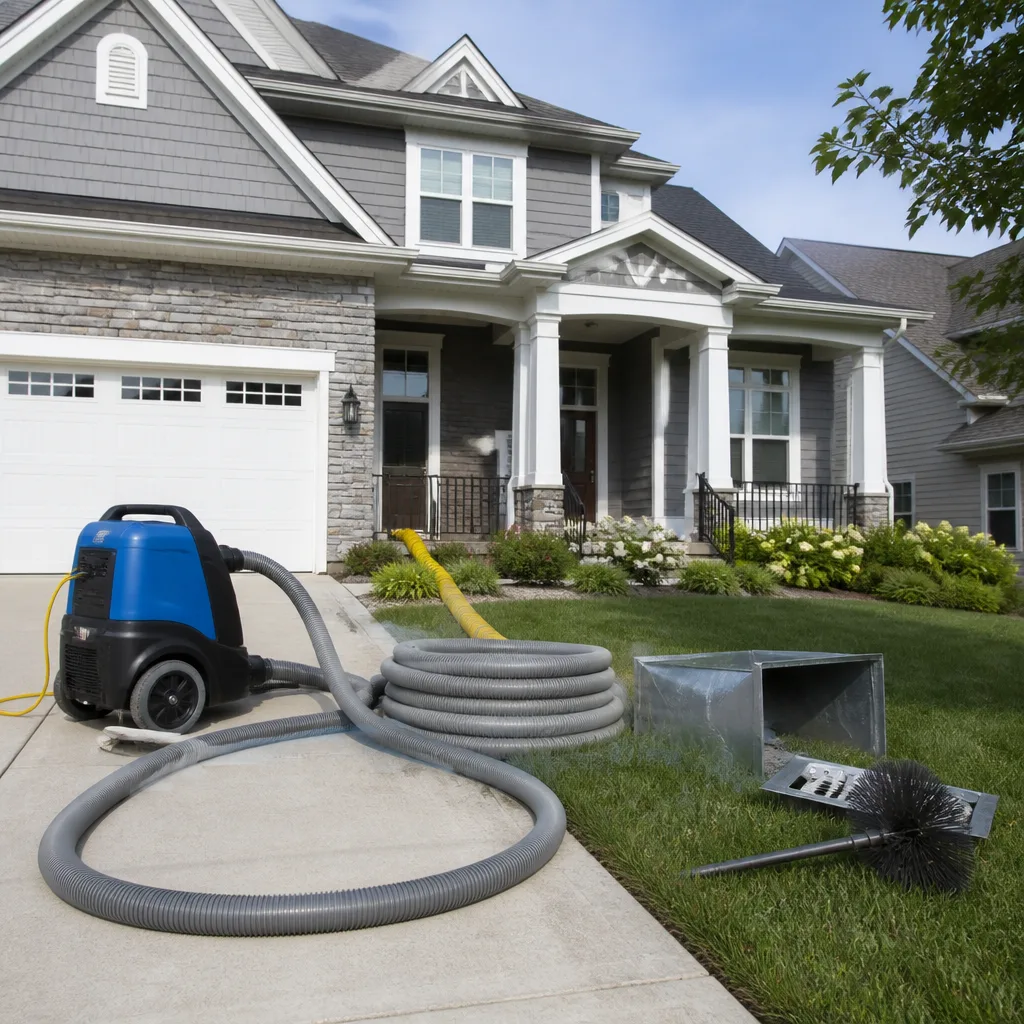 Whole-home duct cleaning
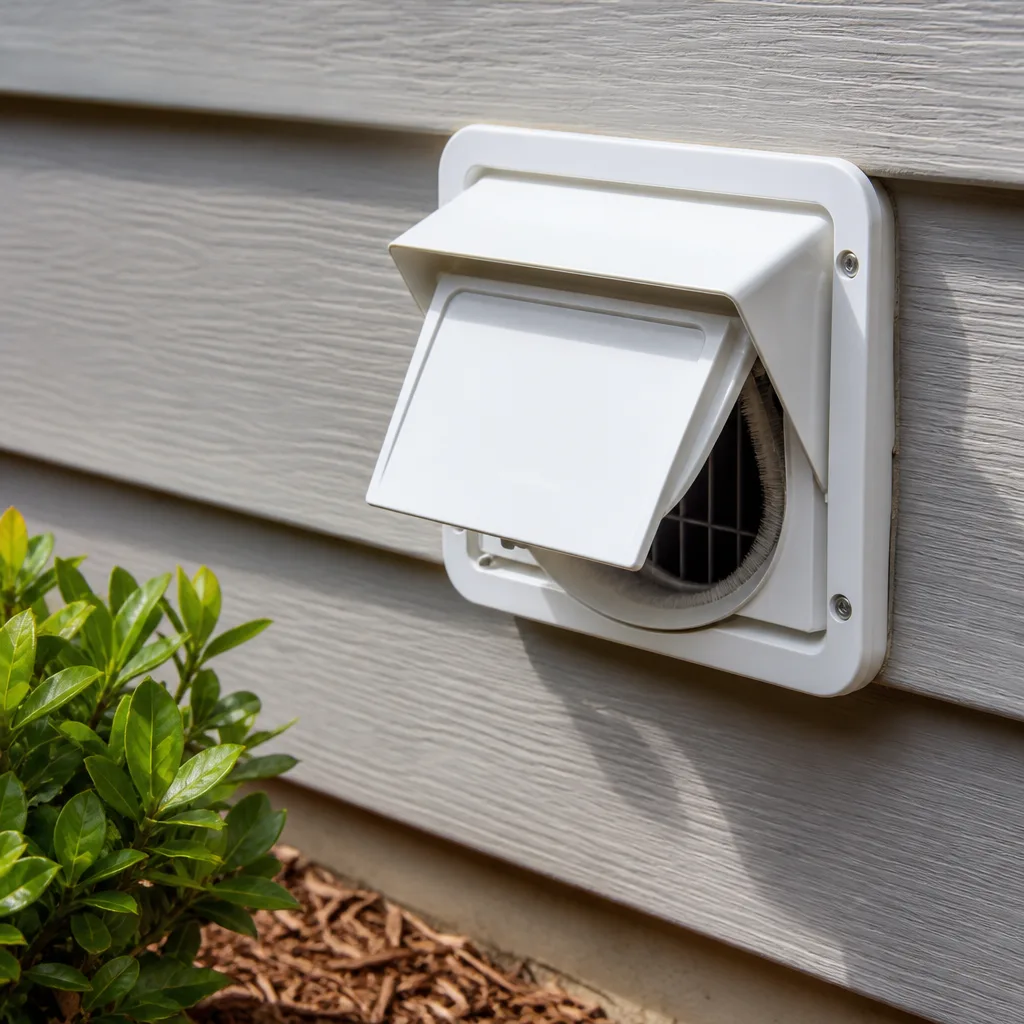 Dryer vent cleaning
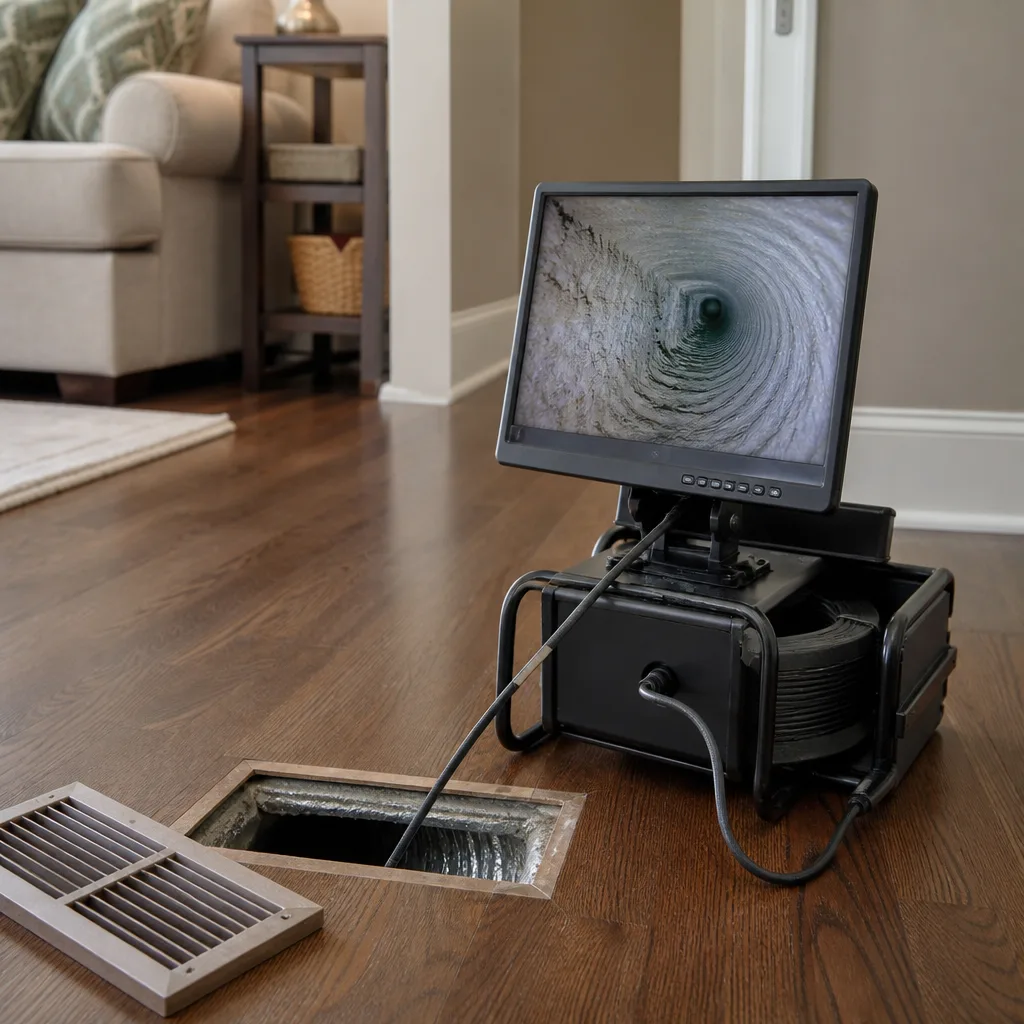 Camera inspection
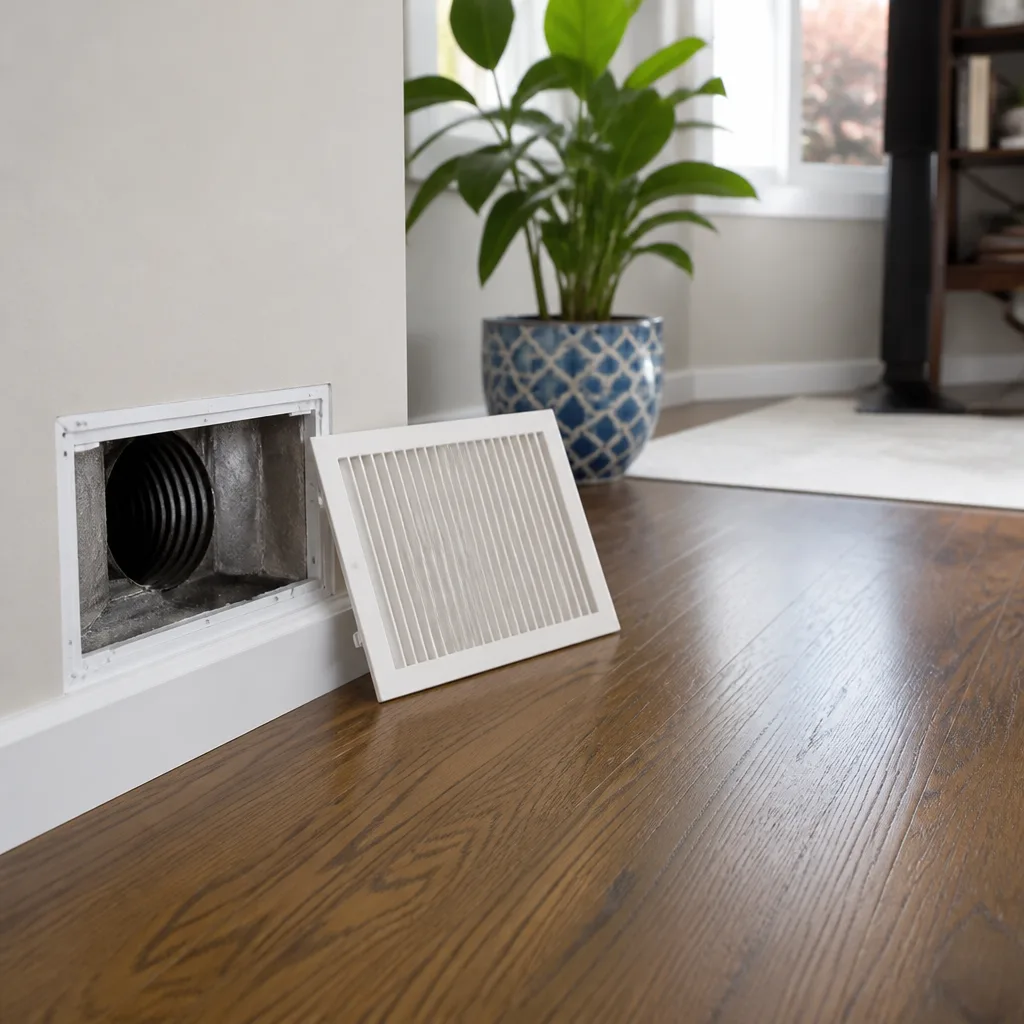 Sanitizing & deodorizing
Whole-system duct and dryer vent check with before-and-after photos - you see exactly what came out of your vents
That "$99 whole-house special" is a bait ad - the real number appears once they are in your hallway, or the "clean" is a shop-vac at the register. We photograph the inside of your ducts before and after instead.
DIY vs Professional Air Duct Cleaning: The Fort Lauderdale Homeowner’s Decision Guide
A homeowner with a shop vac and a register brush can clean the first 12 inches of a duct opening. That’s roughly 3% of the system’s surface area, and it’s the 3% that was already getting the most airflow and least likely to be the real problem. The other 97% is where dust packs into bends, mold takes hold in humid corners, and debris settles in return plenums. This guide explains what that means in practical terms for Fort Lauderdale homes, where humidity changes the math on DIY duct work, and where the line sits between a Saturday project and a job that needs Air Duct Cleaning with professional equipment.
Styles & brands we work with
Quick Answer
DIY duct cleaning in Fort Lauderdale is only genuinely effective for light register dust and visible debris within reach of a vacuum hose, roughly the first foot of duct opening. For anything beyond that, including mold, construction debris, or dust packed into supply trunks and returns, professional negative-pressure source removal is the only method that cleans the system without redistributing contamination into your living space. The cost difference matters less than the containment difference.
Table of Contents
- What DIY Duct Cleaning Can Actually Reach
- The Three Fort Lauderdale Scenarios Where DIY Is Enough
- Why Negative Pressure Is Non-Negotiable in Mold Situations
- The Honest Cost Comparison: DIY Supplies vs Professional Service
- Warranty and Insurance Implications of DIY Duct Work
- The Equipment Floor: What Consumer Tools Cannot Do
- Common Mistakes to Avoid
- When to Call a Professional
- Frequently Asked Questions
- The Bottom Line
What DIY Duct Cleaning Can Actually Reach
Residential duct systems in Fort Lauderdale homes are typically built from rigid sheet metal, flex duct, or fiberglass duct board. A standard system includes supply registers (where conditioned air enters rooms), return grilles (where air gets pulled back to the handler), a supply trunk line, return plenum, and the air handler itself. Average trunk lines run 14 to 20 inches in diameter. Branch lines feeding individual rooms are often 6 to 8 inches in diameter and can run 15 to 40 feet from the trunk.
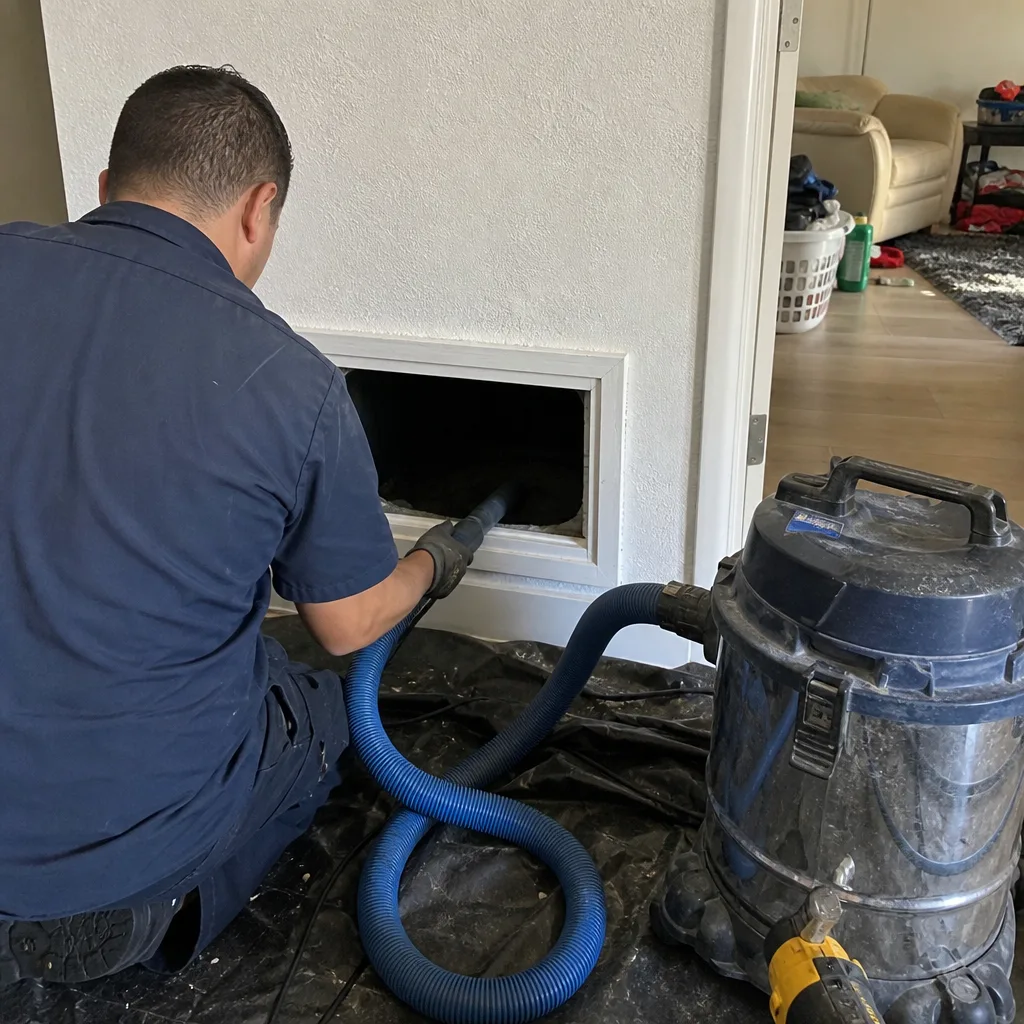
A consumer shop vac with a 2.5-inch hose reaches approximately 12 to 18 inches into a register opening before it hits a bend, a damper, or friction against the duct wall stops forward progress. A hardware-store register brush extends that reach to maybe 24 inches if you’re persistent. In a 30-foot branch run, that means the homeowner’s tool touches 2 to 3 feet of duct surface. The remaining 27 feet might as well be in another building.
What actually accumulates in the unreachable section depends on the home’s history and South Florida’s climate. Dust that makes it past a cheap fiberglass filter tends to stick to the first wet surface it meets. In Fort Lauderdale’s humidity, that often means the inside of a flex duct where condensation forms during the cooling season. Once dust binds to a damp surface, it doesn’t get pulled out by airflow. It adheres, layer by layer, until it becomes a substance closer to felt than loose dust. A shop vac was never going to remove that, no matter how many passes you make from the register.
In our experience at Air Duct Cleaning in Fort Lauderdale, the visible dust at a register opening is almost never the job. It’s the indicator. The real accumulation sits deeper, where the duct changes direction or where flex duct sags between supports.
The Three Fort Lauderdale Scenarios Where DIY Is Enough
There are only a few situations where cleaning the reachable portion of your ducts is genuinely sufficient. Knowing which one you have saves you from paying for work you don’t need. Misidentifying the situation costs more in the long run, because a professional still has to come out after the DIY pass fails to fix the actual issue.
1. New Construction Dust-Out
If you bought a newly built home or just finished a renovation, the dust in your ducts is mostly drywall dust, sawdust, and construction debris from the build itself. This material is loose, dry, and concentrated near the registers because it fell in during construction or got pulled through the system during finish work. It hasn’t had time to bind with moisture or compact into the trunk line.
What it looks like: white or light gray powder around register openings, maybe small wood shavings visible at the boot, and a faint drywall smell when the system first runs. A homeowner with a good HEPA-filtered shop vac can remove the visible debris from each register boot and the first reachable section of flex duct. But be thorough about the return side too. Construction debris gets pulled into return cavities and sits against the filter housing.
2. Post-Renovation Debris
A kitchen remodel or bathroom renovation in a Fort Lauderdale house built before 1990 typically involves some amount of wall demolition. If the HVAC system ran during the project or the registers weren’t sealed during the work, fine dust infiltrated the entire system. The difference between renovation dust and new construction dust is that renovation debris often includes old insulation fibers, plaster dust, and whatever lived inside the demolished wall cavity.
Diagnose it first: remove a register cover in the renovated room and in a room far from the work. If the far room’s register is clean and only the renovated area shows debris, that’s a localized problem you can address with a shop vac and patience. If both registers show the same dust, the material traveled through the system and you’re now looking at a whole-system problem that a register-level cleaning cannot touch.
3. Light Filter Bypass
This is the most common legitimate DIY scenario in Fort Lauderdale. A fiberglass filter that’s been left in too long, or installed with gaps around the edges, lets household dust bypass filtration and deposit on the return side of the system. The accumulation is mostly lint, pet hair, and household dust, fine and loose rather than packed or sticky.
What it looks like: a visible line of gray fuzz around the return grille, dust accumulating faster than normal on the filter itself, and maybe a thin coating inside the first few feet of the return duct. Vacuuming what you can reach from the return side and replacing the filter with a properly sized MERV 8 or better filter often resolves this. But if the bypass ran for years, the loose dust may extend well past your reach, and that’s the point where a professional cleaning using negative-pressure extraction becomes the only way to get the rest of it out.
None of these scenarios involve mold. That’s the line that matters most in Fort Lauderdale, where the dew point hovers near the indoor temperature for months at a time.
Why Negative Pressure Is Non-Negotiable in Mold Situations
Here’s where the DIY-vs-professional debate stops being about cost and becomes about physics. When you disturb mold or heavy biological growth inside a duct system, you’re not just failing to clean it. You’re releasing spores and fragments into the airstream, where the blower will distribute them into every room the system serves. A shop vac or brush does not prevent this. In fact, it accelerates it.
Professional Duct Sealing in Fort Lauderdale companies use a method called source removal with negative air containment. Here’s how it works and why it matters:
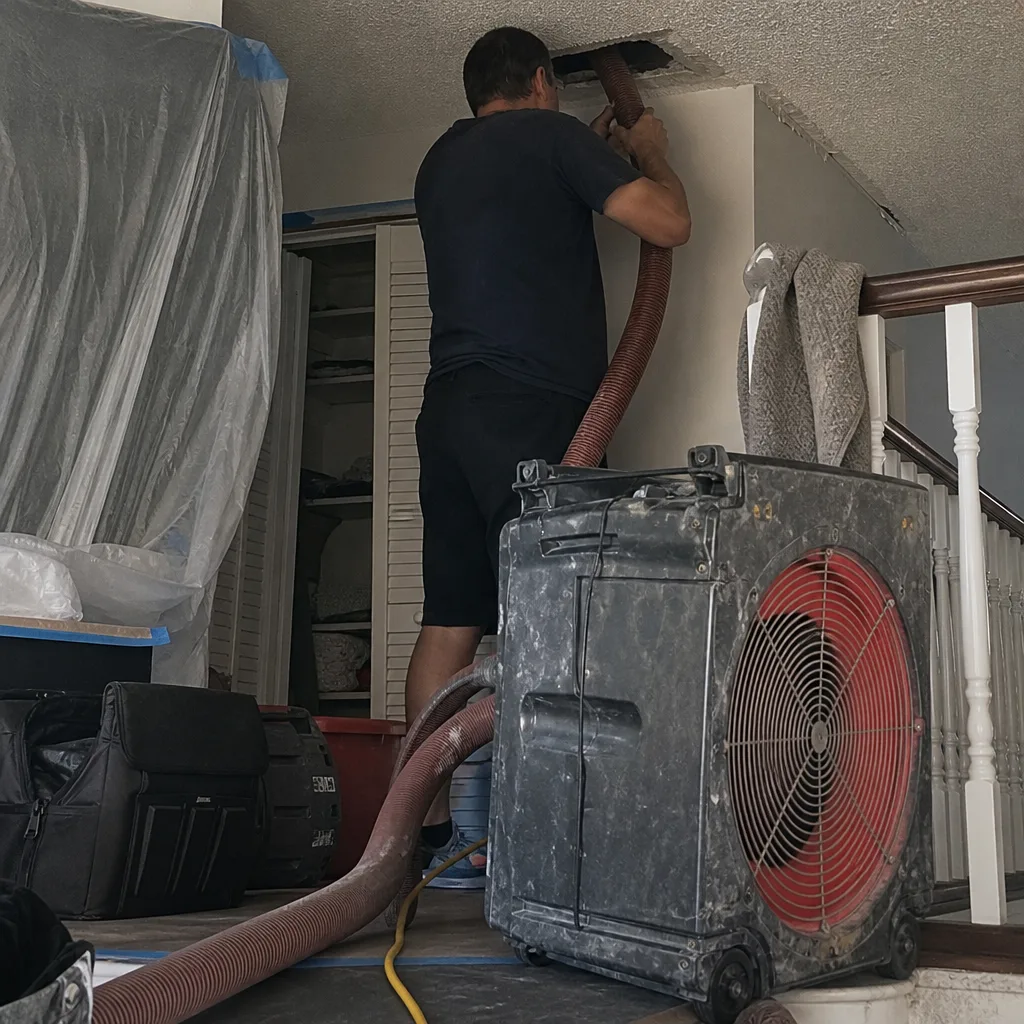
- The system is placed under negative pressure. A high-powered vacuum unit, either truck-mounted or a portable Nikro-style negative air machine, connects to the duct system near the air handler. This pulls air through the ducts continuously during the entire cleaning process.
- Every register and return is sealed before work begins. With the system sealed except for the access point being cleaned, air can only move one direction: into the ducts and toward the vacuum. Any particle disturbed during cleaning travels to the collection unit, not into your living room.
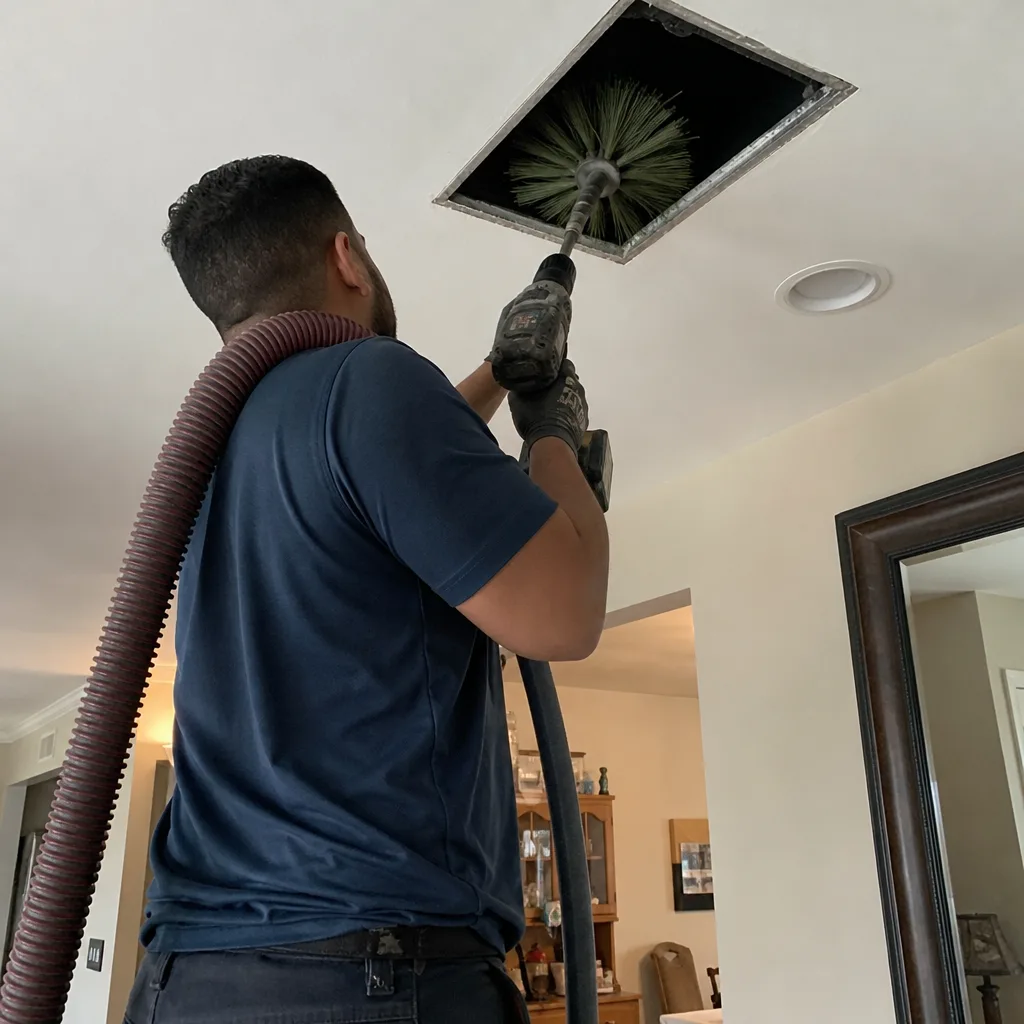
- Agitation happens inside the containment field. Rotary brushes like those used in Rotobrush systems spin through the duct interior, breaking loose adhered material. Because the system is under negative pressure, the loosened debris gets pulled immediately into the vacuum stream before it can escape the duct.
- Filtration at the vacuum unit captures the material. Industrial HEPA filtration on the negative air machine traps particles down to 0.3 microns. What goes into the vacuum stays in the vacuum.
In a Fort Lauderdale home where mold is present in the ducts, the difference between this process and a DIY attempt is the difference between containing the problem and broadcasting it through the house. If you suspect mold in your ducts, the safest move is to stop using the system until it’s assessed. The spores don’t just recirculate through the house. They get pulled through the cooling coil, where cold surfaces and condensation give them exactly what they want for continued growth.
This is not a scare tactic. It’s the reason containment exists as a standard in the first place. The trade developed negative-pressure source removal precisely because early duct cleaning methods, the ones where a technician just shoved a brush into each register, spread contamination and made situations worse. The standard exists because the failure mode was documented.
The Honest Cost Comparison: DIY Supplies vs Professional Service
The DIY pitch usually starts with the same math: a professional duct cleaning in Fort Lauderdale costs $350 to $800 for a typical single-family home, while a shop vac costs $100. But the honest comparison includes the probability of an incomplete job, the cost of follow-up professional service, and the equipment gap that no amount of persistence overcomes.
What DIY Actually Costs
- HEPA-filtered wet/dry vac: $80 to $180 for a unit with enough suction to matter. A standard household vacuum or a non-HEPA shop vac will blow fine particles right back into the room, which defeats the purpose. This is a hard floor, not a nice-to-have.
- Register brush kit: $25 to $50 at a hardware store. These reach 24 to 36 inches into a straight duct run.
- Extension hoses and adapters: $30 to $60 for enough length to reach deeper from multiple angles.
- Replacement filters for the vac: $15 to $30 per filter, and filters used in a dusty duct cleaning will clog faster than you expect.
- Inspection camera attachment: $40 to $100 if you want to verify what you actually cleaned versus what you think you cleaned.
Realistic total for a homeowner starting from nothing: $190 to $420. That’s before you count the time, the mess, and the chance that you’ll run the system afterward and realize the problem you were chasing, whether it’s a musty smell or a dust film reappearing on furniture, is still there. The HVAC system doesn’t care how many hours you spent. It only cares whether the material came out or didn’t.
Things get more expensive when the DIY attempt doesn’t solve the problem. You’re now paying for professional work on top of the money already spent on consumer tools, and in some cases the professional has to deal with additional material that got knocked loose from the duct walls during the DIY pass and redistributed deeper into the system. In Fort Lauderdale’s humidity, loose material that lands on a damp duct surface becomes adhered material, which takes more work to remove.
Professional Service Cost Reality
A full system cleaning by Hollis Air Duct Fort Lauderdale home professionals in Fort Lauderdale typically runs $350 to $800 for a standard single-family home, depending on the number of systems, accessibility of the air handler, and whether the job involves mold remediation or just standard source removal. The price is written down before work starts, and it doesn’t move once the technician is inside.
The equipment difference is the reason the service exists. Our Rotobrush rotary brush systems and Nikro negative-air machines are the same class of equipment used in commercial buildings. They create the containment environment described earlier, agitate material loose from deep in the trunk, and capture it in HEPA filtration. No hardware-store purchase replicates that. If it did, the professional equipment companies would be out of business.
Warranty and Insurance Implications of DIY Duct Work
This section covers the parts no one puts in a blog post: what your homeowner’s insurance and new-construction warranty actually say when the owner starts opening up duct systems.
New Construction Warranties
If your Fort Lauderdale home was built within the last 10 years, your builder likely provided a structural warranty and a separate mechanical warranty covering the HVAC system. Read the fine print on the mechanical warranty. Most require that HVAC maintenance and repair work be performed by a licensed contractor using industry-standard methods. A DIY duct cleaning that disturbs the system, even if done carefully, can void coverage on related components. That means if a DIY project knocks loose a duct connection, and that connection develops a leak that causes the system to lose efficiency or pull attic air into the house, the warranty claim can be denied on the basis of owner interference.
Homeowner’s Insurance
Homeowner’s insurance in Florida is already complicated. Policies are explicit about mold damage; most cap mold-related claims at a few thousand dollars regardless of the overall dwelling coverage. If a DIY duct cleaning distributes mold spores through the house and mold later appears on drywall or belongs to a claim, the insurer may investigate whether the contamination can be traced to the owner’s actions. An insurer looking at a claim where the homeowner admits to having agitated mold inside duct work without professional containment has grounds to deny the claim for negligence.
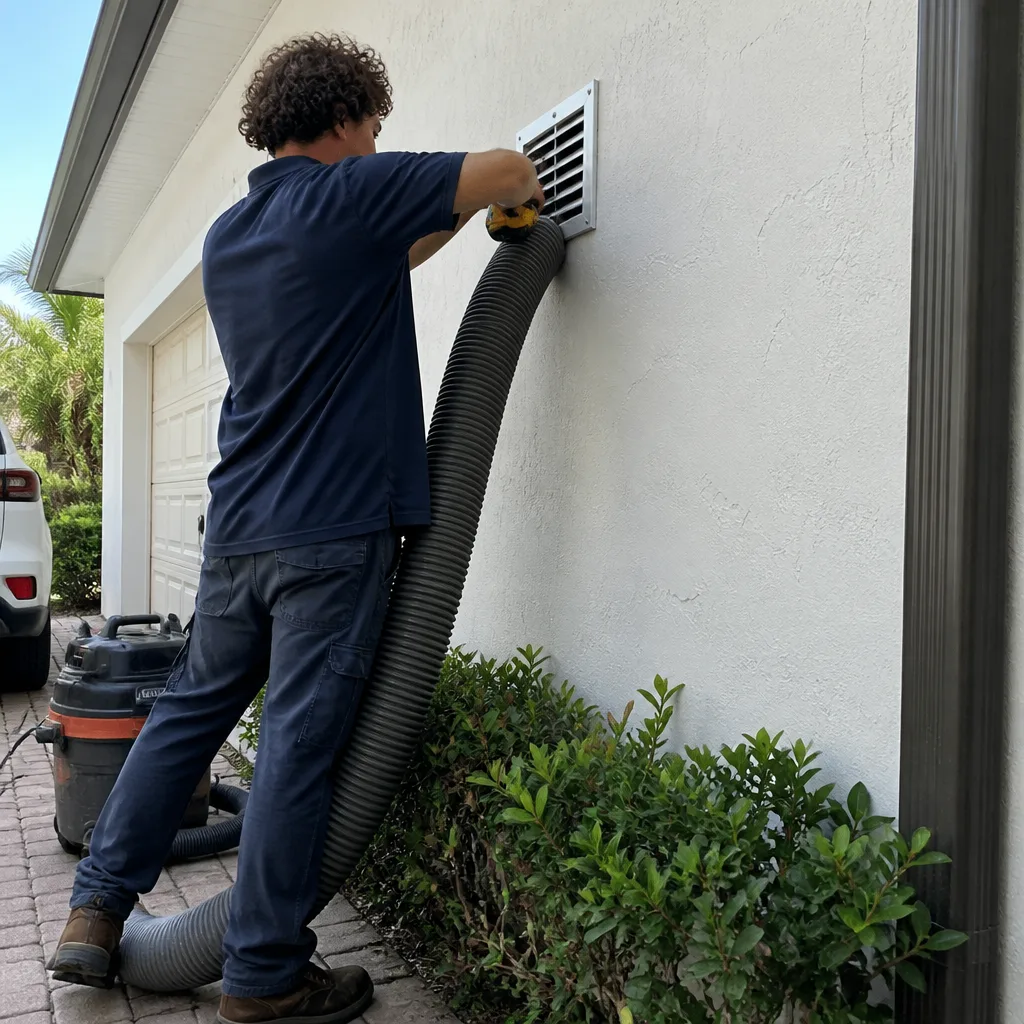
The same logic applies to dryer vent cleaning, which is why Dryer Vent Cleaning in Fort Lauderdale is treated as a professional service rather than a homeowner task. A clogged dryer vent is a fire hazard. A homeowner who disconnects the vent and clears only the first few feet has not solved the problem, and has now created a paper trail that could matter if a fire occurs.
What This Means in Practice
If your duct problem is light, visible dust near the registers and you’re confident it’s from a construction project or a filter that slipped, a careful DIY pass is low risk. Document what you did, including before and after photos. If the problem involves mold, persistent odors, water damage, or material deep in the system that you can’t see or reach, the liability of a botched DIY attempt exceeds any money you saved.
The Equipment Floor: What Consumer Tools Cannot Do
The physical limitations of consumer equipment aren’t a matter of effort or technique. They’re a matter of how the equipment is designed and what it’s rated to capture. Here’s the cold, structural difference:
Suction Power and Capture Rate
A typical wet/dry vac moves 150 to 200 cubic feet per minute (CFM) of air through a 2.5-inch hose. A Nikro negative-air machine used for duct cleaning moves 2,000 to 5,000 CFM through the main trunk. That’s a 10x to 25x difference in air movement, and it’s the difference between pulling a particle loose and letting it settle while the blower is off. The professional system doesn’t just clean harder; it holds the system under continuous negative pressure so that nothing escapes during cleaning.
Filtration Standards
Consumer vacs ship with paper filters that capture maybe 50% of particles in the fine dust range. That means half of what you vacuum up goes right through the exhaust port and back into the room. A true HEPA filter on professional equipment captures 99.97% of particles down to 0.3 microns, capturing mold spores, dust mite matter, and the fine particulates that are the actual air quality concern in Fort Lauderdale homes.
Rotary Brush Reach and Agitation
A register brush chained to a drill can spin inside the first few feet of duct. It cannot navigate bends. It cannot run the full length of a branch line. It cannot reach the trunk at all. A Rotobrush system pushes flexible drive shafts 25 to 50 feet down branch lines and through trunk lines, with variable speed control and continuous agitation that breaks material loose in sections the homeowner has no way to access.
Containment Architecture
This is the part no consumer tool replicates. Professional cleaning seals the system and holds it under negative pressure throughout the work. The duct system becomes a containment vessel. Air moves inward, not outward. Every particle loosened during cleaning gets pulled to the filter bank. There’s no consumer equivalent, because there’s no consumer reason to build one. If you need containment, you need professional equipment.
Honeywell, Aprilaire, and the Filtration Question
One useful point on filtration: the upgrades that matter alongside duct cleaning are filtration products from brands like Honeywell and Aprilaire, typically a media filter cabinet or electronic air cleaner installed at the air handler. These capture particles before they enter the ducts, reducing the rate at which the system re-accumulates. We use these products, and they’re worth mentioning because a duct cleaning is only as durable as the filtration that follows it.
Common Mistakes to Avoid
- Running the system while cleaning registers. If the blower is on while you’re brushing and vacuuming at a register, loose debris gets pulled into the system, not out of it. Turn the system off at the thermostat and the breaker.
- Using a non-HEPA vacuum. A standard shop vac exhausts fine particles back into the room at velocity. In a Fort Lauderdale home, that’s adding to the indoor particulate load, not reducing it.
- Shoving a brush too hard into flex duct. Flex duct inner liners are thin plastic film over wire coil. Aggressive brushing from a homeowner who can’t see what they’re hitting can puncture the liner, create a leak, and cause the system to pull humid attic air into the ducts. That’s a moisture problem in the making.
- Ignoring the return side. Homeowners focus on supply registers because that’s where cold air comes out. The return side is where air enters the system, and it’s usually dirtier because it sees unfiltered or poorly filtered air from the house. A DIY pass that skips the return achieves roughly nothing.
- Treating visible mold as a cleaning problem instead of a moisture problem. Mold in ducts in Fort Lauderdale is usually a symptom of condensation or a leak somewhere in the system. Cleaning the mold without fixing the moisture source guarantees re-growth within a season.
- Assuming the air handler doesn’t need attention. The coil, blower wheel, and drain pan sit next to the duct system and share its air. If the ducts were dirty enough to need cleaning, the air handler is probably dirty too, and that’s a job for a technician with the training to open the cabinet correctly.
- Believing a duct cleaning should cost $99. In Fort Lauderdale, the companies advertising $99 whole-house duct cleanings are selling a loss-leader to get a technician into your home, where the price changes. Real pricing is $350 to $800 for a full system, written before work starts. If a quote seems too low to be real, it’s because it is.
When to Call a Professional
Call a professional when the problem is past the register. If you see mold, smell persistent mustiness when the system runs, have visible debris deep in the return, or recently completed a renovation that left the system coated in fine dust, the equipment and containment difference matters. The same applies if you have a family member with allergies or respiratory conditions and you can’t verify what’s actually inside the ducts. A free estimate from a Fort Lauderdale company that prices in writing before any work starts costs you nothing and gives you a professional read on the system. Hollis Air Duct Fort Lauderdale offers free estimates in Fort Lauderdale, call (754) 354-3644.
Frequently Asked Questions
Professional air duct cleaning in Fort Lauderdale typically costs $350 to $800 for a single-family home, depending on the number of systems, accessibility of the air handler, and whether mold remediation is required. Companies advertising $99 whole-house cleanings are almost always selling a loss-leader to get a technician through the door, at which point the price escalates. A written price before work starts is the single best signal you’re dealing with a legitimate operation. Call (754) 354-3644 for a free estimate with a written, no-hassle price.
DIY air duct cleaning is sufficient for light, dry debris within the first 12 to 24 inches of a register opening, typically after new construction, a minor renovation, or a period of filter bypass. It cannot reach the trunk line, most branch runs, or the air handler, which is where the majority of accumulated material sits. If the problem is visible at the register, DIY can help; if the problem is behind the register, DIY cannot reach it.
No, and in a Fort Lauderdale home, you should not try. Disturbing mold inside duct work without negative-pressure containment releases spores into the airstream, where the blower distributes them through every room. Professional source removal places the system under continuous negative pressure so that loosened material travels to HEPA filtration rather than into your living space. If mold is present, stop using the system until it’s assessed by a professional.
In Fort Lauderdale’s climate, most homes need a full professional duct cleaning every 3 to 5 years, with variance based on pets, smoking, renovation history, and the quality of the filtration in place at the air handler. For a complete schedule, see our Seasonal Air Duct Cleaning Care for Fort Lauderdale: Year-Round Homeowner’s Guide. Homes near the beach or the Intracoastal sometimes need more frequent service due to salt air and persistent humidity. A home with a high-efficiency media filter from Aprilaire or Honeywell will re-accumulate more slowly than one running a $3 fiberglass filter.
Cheap duct cleaning quotes in Fort Lauderdale almost always mean either a bait-and-switch operation or a company that cleans registers only and skips the air handler and trunk line. A proper source removal cleaning requires expensive negative-air machines and rotary brush systems, plus a technician who knows how to use them. That work cannot be done for $99, and the companies offering it know they’ll make up the difference once they’re inside. Call (754) 354-3644 for a written price you can hold us to.
Ask to see before-and-after photos of the trunk line and air handler, taken with an inspection camera during the job. A legitimate company documents its work because the job is hard to verify from the living room. The 365-Day Done Right Promise from Hollis Air Duct Fort Lauderdale means the work is covered in writing for a full year, and if anything fails, we come back at no charge, including a free second visit.
The Bottom Line
The DIY-vs-professional question in Fort Lauderdale comes down to containment more than cost. A homeowner can clean the first foot of a register boot, and in the right scenario, that’s sufficient. But the material that actually matters, the packed dust, the mold, the renovation debris, sits beyond reach in the trunk and branch lines, and removing it safely requires negative-pressure equipment that doesn’t exist at the hardware store. Paying for professional source removal once is cheaper than paying for a DIY attempt and then paying for professional service anyway, and it avoids the risk of disturbing mold inside your system. Written pricing and a 365-day guarantee make the decision a low-risk one.
Written by Roy Castellanos, Owner at Hollis Air Duct Fort Lauderdale, serving Fort Lauderdale since 2004.
See the difference
 Before
 After
After Before
 After
After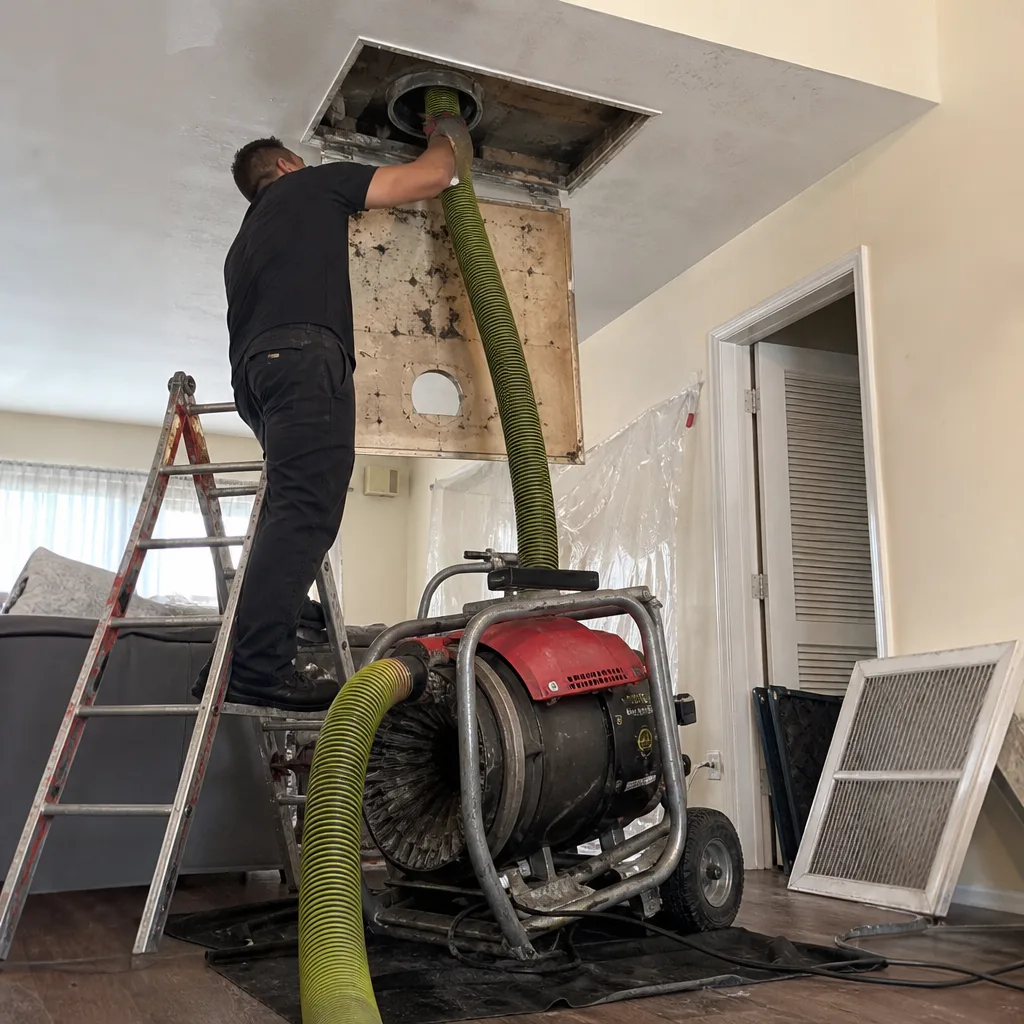 Before
 After
After