
Last updated October 15, 2026
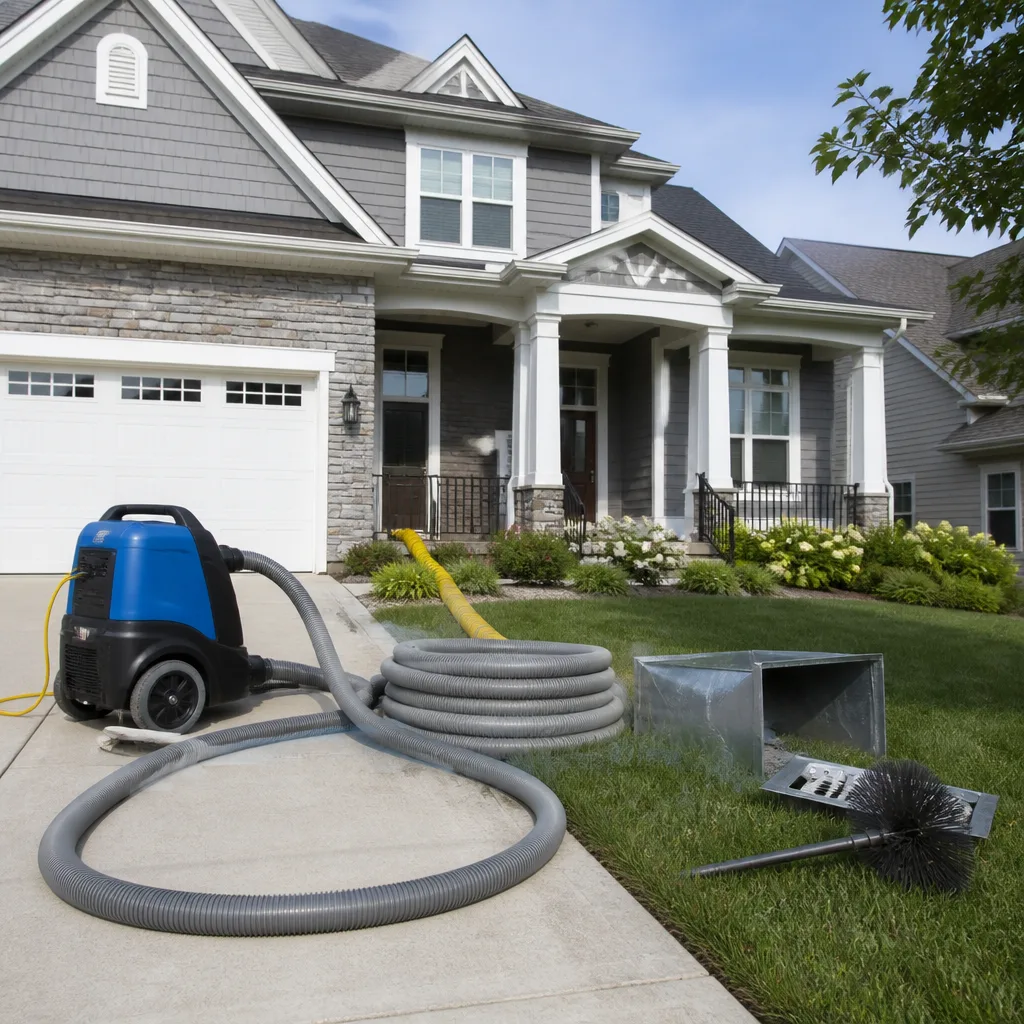 Whole-home duct cleaning
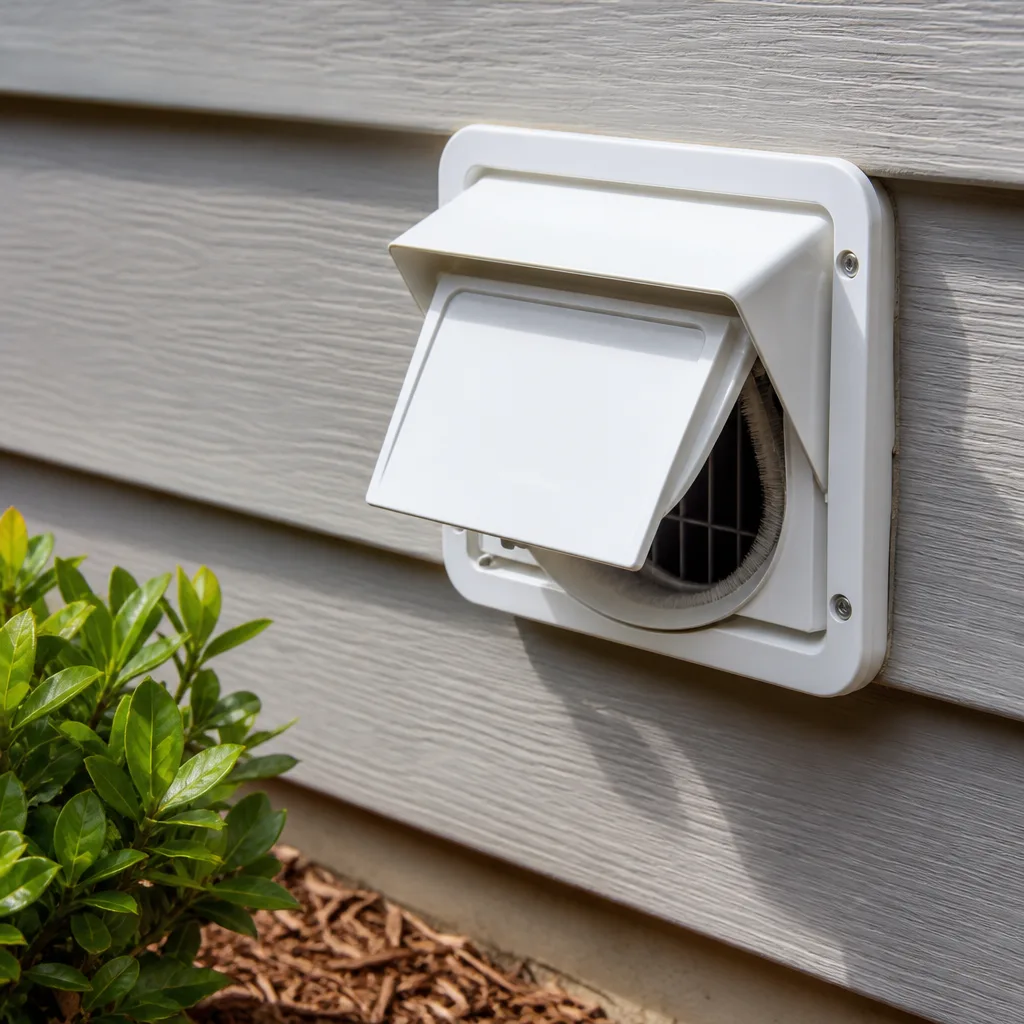 Dryer vent cleaning
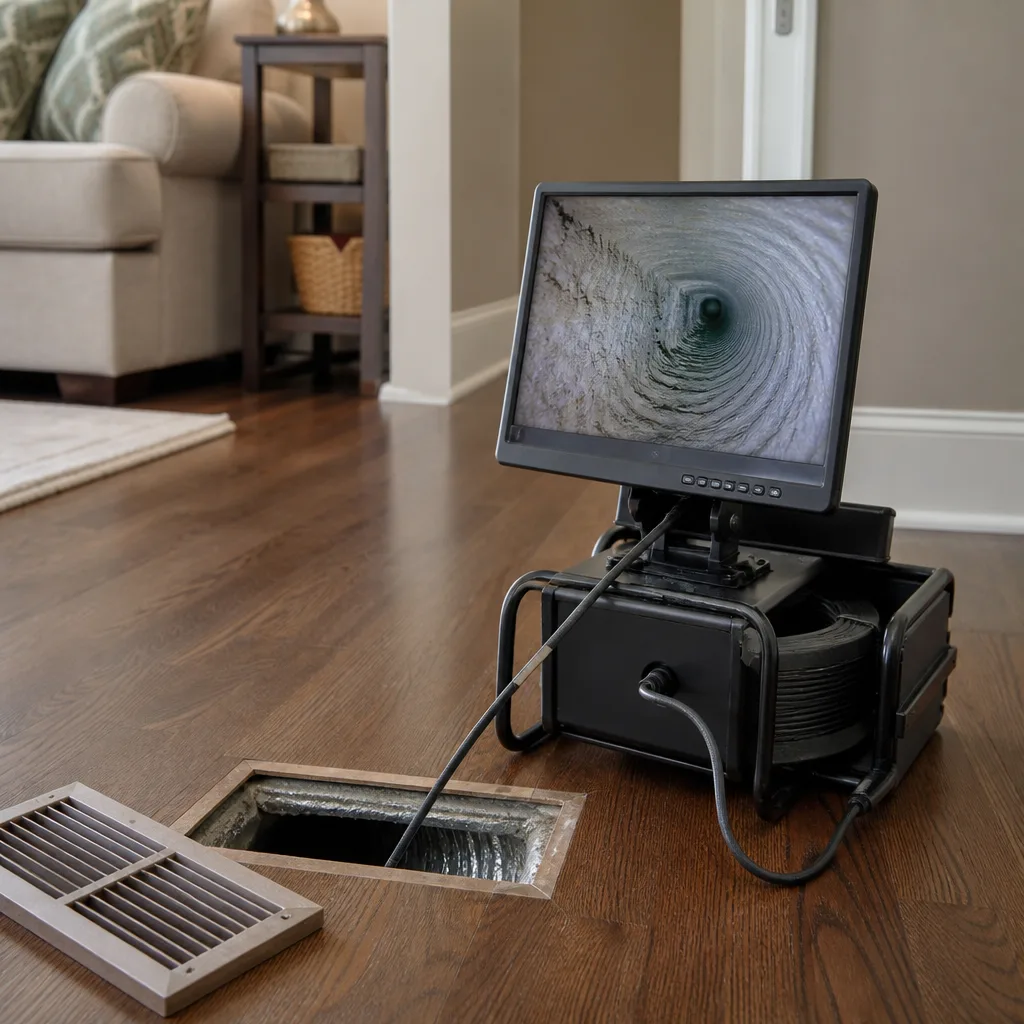 Camera inspection
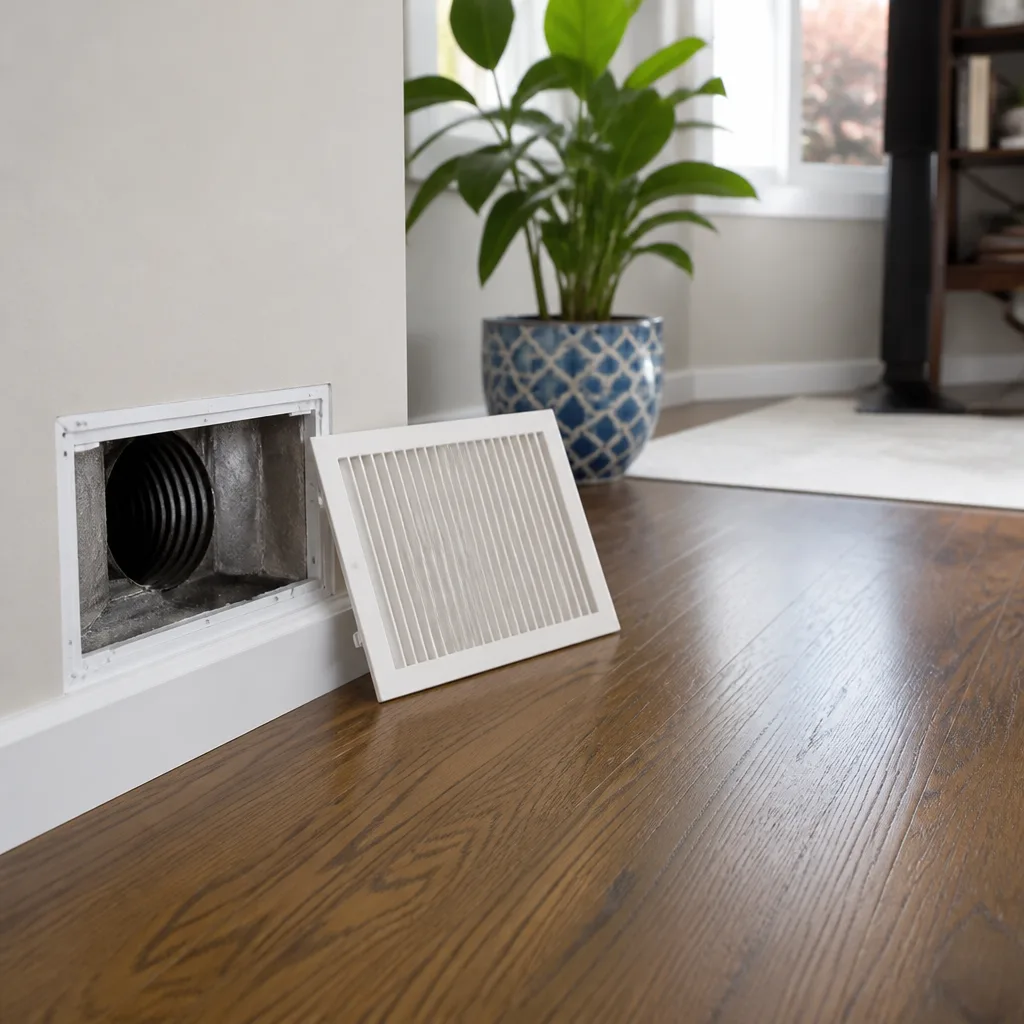 Sanitizing & deodorizing
Whole-system duct and dryer vent check with before-and-after photos - you see exactly what came out of your vents
That "$99 whole-house special" is a bait ad - the real number appears once they are in your hallway, or the "clean" is a shop-vac at the register. We photograph the inside of your ducts before and after instead.
Air Duct Cleaning Maintenance Checklist for Fort Lauderdale Homeowners
A homeowner who changes their MERV-8 filter every 90 days but never opens a duct access panel after a wet season is doing half the maintenance job and thinking they’ve done it all. In Fort Lauderdale, the air moving through your ducts carries salt, sand, mold spores, and pollen from plants that thrive nowhere else in the continental United States. This guide is built around the climate triggers that actually dictate when your ducts need attention here, not a generic calendar. You’ll learn what to check, when to check it, what you’re looking at, and when to stop looking and call someone for Air Duct Cleaning with the right equipment.
Quick Answer
The core of air duct maintenance in Fort Lauderdale is a trigger-based inspection schedule tied to the wet season (May through October) and any post-storm event, not a fixed quarterly calendar. You should visually inspect supply and return registers monthly during the wet season, change filters on a 45-to-60 day cycle during high-pollen months, and schedule a full professional cleaning every 24 to 36 months depending on visible buildup, occupancy, and whether you have pets. A full system cleaning in Fort Lauderdale typically runs $330 to $620 for an average single-family home, with add-ons like sanitizer or duct sealing priced separately in writing before work starts.
Styles & brands we work with
Table of Contents
- Why Fort Lauderdale’s Climate Dictates the Schedule
- Visual Inspection: What to Check at Every Register
- Filter Selection and Replacement for Broward County Air
- The Wet Season Protocol: May Through October
- What to Do After a Storm or Flood Event
- How to Log Duct Condition for Insurance and Resale
- DIY Checks vs. When the System Needs a Technician
- Common Mistakes to Avoid
- When to Call a Professional
- Frequently Asked Questions
- The Bottom Line
Why Fort Lauderdale’s Climate Dictates the Schedule
Most maintenance checklists you’ll find online were written for houses in Ohio or Texas. They assume a predictable cycle: cooling season, heating season, spring pollen, fall leaves. Fort Lauderdale doesn’t work that way. The Gulf Stream keeps the air humid year-round, and the Atlantic storm season runs from June 1 to November 30, with the heaviest rain typically falling between May and October. That moisture doesn’t stay outside. It moves through your air handler, condenses on coils, and creates conditions inside ducts that support microbial growth within 48 to 72 hours when relative humidity inside the system stays above 60 percent.
Salt air is the second factor. Homes within three miles of the coast deal with airborne salt that accelerates corrosion on aluminum duct components and settles as a fine white film at supply registers. We’ve pulled apart ducts in Victoria Park and Rio Vista homes where the salt accumulation was visible on galvanized seams within five years of installation. That same salt binds with dust to form a crust that doesn’t just blow away, it has to be mechanically removed.
The trigger-based schedule that makes sense for this climate looks like this:
- Monthly register inspection during wet season (May – October): Take 90 seconds to check visible buildup at supply and return registers.
- Filter change every 45 – 60 days during pollen peaks (February – May and October – November): Broward County has two distinct pollen seasons, not one.
- Full professional cleaning every 24 – 36 months: Tighter for pet owners, smokers, coastal properties, or anyone with respiratory conditions.
- Post-storm inspection within 7 days: After any event that brought water into the home, or any power outage longer than 24 hours that allowed humidity to rise inside unconditioned duct runs.
- Duct sealing check every 5 years: Older flex-duct systems in 1980s and 1990s construction in Plantation and Sunrise frequently show seam failures.
This schedule isn’t arbitrary. It’s tied to what we know about how fast biological material colonizes inside dark, warm, humid duct runs in South Florida, and how quickly filters load up when the air is carrying oak, pine, and Australian pine pollen plus dust from construction and decomposting vegetation. If you want to start with the basics, our Air Duct Cleaning in Fort Lauderdale page walks through what a full cleaning includes and what it costs.
Visual Inspection: What to Check at Every Register
You don’t need a camera, a ladder, or any special tools to catch most duct problems early. You need a flashlight and about two minutes per register. What you’re looking for falls into four categories: discoloration, debris type, airflow pattern, and odor at the register. Each tells you something different.
Discoloration patterns:
- Black or dark gray speckling around the register edges: This is usually mold or mildew. It concentrates where cooled air meets warm room air and condensation forms. One or two registers with this pattern means localized moisture. Every register with this pattern means the whole system has a moisture problem, not just one room.
- Brown or rust-colored staining on the register face or wall above it: This usually signals condensation running down the inside of the duct boot. The duct is sweating, and the water is carrying dust and rust particles with it. Common in Fort Lauderdale homes where attic ducts run through unconditioned space.
- White, chalky film that wipes off but comes back: This is salt. If you’re within three miles of the beach, it’s normal. If you’re inland in Davie or Cooper City, it’s more likely drywall dust from a renovation that never got cleaned out of the system.
Debris types and what they signal:
- Gray, fluffy dust that looks like dryer lint:This is normal household dust. If you see it accumulating within two weeks of a cleaning, the system has a return-side leak pulling unfiltered air from the attic or wall cavity.
- Sandy, gritty particles:In coastal Fort Lauderdale, this is windblown sand entering through open windows and getting drawn into the return. It’s abrasive and accelerates wear on fan blades. It also means your return filter isn’t seated properly or you’re running the system with windows open regularly.
- Pollen-heavy yellow or green film: This shows your filter either isn’t the right MERV rating, isn’t sealed at the edges, or is past its change date. South Florida’s pollen load from melaleuca and Australian pine is aggressive enough to plug a filter in 30 days during peak bloom.
- Small insect parts or droppings: This means an opening somewhere in the duct run. Palm rats and roof rats in older Fort Lauderdale neighborhoods like Sailboat Bend and Progresso Village are known to chew through flex duct. This is not a cleaning issue. It’s a repair issue and a health issue, and it needs to be addressed the same week you notice it.
Airflow and odor checks:
Hold a piece of tissue paper at each supply register while the system is running. If the tissue doesn’t lift, or lifts weakly compared to other rooms, that register’s duct run has a restriction, a disconnection, or a damper issue. Uneven airflow room to room is a symptom, not a design choice. Odor at the register that smells musty or like wet cardboard points to moisture inside the duct, not a dirty filter. Change the filter, then recheck. If the smell persists after 48 hours, the moisture is in the duct or on the coil, not in the filter media.
Filter Selection and Replacement for Broward County Air
Broward County’s air carries a heavier particulate load than most of the country. Humidity keeps particles suspended longer, and the native and invasive plant species produce pollen at volumes you won’t find in a national filter-change chart. The standard “change every 90 days” advice fails here because it doesn’t account for the pollen calendar or the salt load near the coast.
Fort Lauderdale’s two main pollen seasons:
- February through May: Oak, pine, and melaleuca (paperbark tree) pollen. Melaleuca is a non-native invasive that produces heavy pollen in late winter and early spring, exactly when many people run their systems on fan-only mode with windows open.
- October through November: Australian pine and ragweed. Australian pine lines canals and roadways throughout Broward County, and its pollen is fine enough to pass through a MERV-8 filter.
During these two windows, a 1-inch fiberglass filter will load up in 30 days or less. A MERV-11 pleated filter will typically run 45 to 60 days before it’s visibly gray. What we recommend for most Fort Lauderdale homes is a MERV-11 pleated filter changed every 45 days during pollen season and every 60 days the rest of the year. Homes with multiple pets, smokers, or anyone with asthma or allergies should bump to MERV-13 and check monthly. We work with filtration products from Honeywell and Aprilaire on jobs where homeowners want cabinet-style media filters or electronic air cleaners, and either will outperform a 1-inch box-store filter. The honest trade-off: a standard 1-inch slot limits what any filter can do, and a MERV-13 in a 1-inch format will restrict airflow on many residential air handlers. If you’re upgrading filtration, you need to evaluate the blower’s static pressure tolerance, not just swap in a denser filter.
What filters cannot do:
A filter cleans the air before it enters the return. It does nothing for buildup already inside the supply ducts, and it does nothing for microbial growth on the coil or in the drain pan. If you run a MERV-13 filter for three years but never clean the ducts, you’re breathing air that’s passing through three years of accumulated dust and fiber every time the blower kicks on. Filter discipline and duct cleaning are two separate jobs that support each other. The full picture is covered on our Air Duct Cleaning in Fort Lauderdale service page.
The Wet Season Protocol: May Through October
Between May and October, Fort Lauderdale receives an average of 8 to 10 inches of rain per month. Afternoon thunderstorms are near-daily in July and August. That means the air entering your return grilles is saturated nearly every day, and the air handler is doing double duty: cooling the air and condensing water out of it. A properly functioning system drains that water away. A system with even a minor issue, a clogged drain line, a dirty coil, or a pan that’s slightly off level, holds that water against metal and fiberglass surfaces inside the air handler cabinet and the first few feet of the supply plenum.
Here is the wet-season protocol we put on paper for homeowners who call us in Fort Lauderdale during the summer:
- On the first of each month, May through October, walk the house and inspect every supply and return register. Look for the discoloration and debris patterns described above. This takes 10 minutes in a typical single-story home.
- Check the condensate drain line once a month. If you have a clear PVC line at the air handler, look for standing water or slug buildup. Pour a cup of white vinegar down the line monthly during the wet season. It keeps the line clear and reduces bio-slime.
- Run the system on an 8-to-10 degree set-back or keep the fan on automatic. Constantly running the fan in “on” mode during high-humidity weather can re-evaporate condensate from the coil and push humid air back into the supply ducts. Automatic is the better setting for moisture control.
- After any continuous 7-day stretch where indoor relative humidity reads above 60 percent on a hygrometer, check the registers for dampness. Not condensation, but actual moisture. If you find it, there’s a supply duct leak or an attic air leak into the return.
- At the end of October, do a more thorough inspection: remove two or three register covers and look inside the duct boot with a flashlight. If you see visible dust blanket, rust, or any dark staining on the duct liner, schedule a professional cleaning before the dry season starts.
The wet season is when most of the problems we find in Fort Lauderdale homes actually start. Not because anything suddenly fails, but because small moisture issues that are invisible during the dry months compound week after week for five months. By November, those small issues are visible. By the following May, they’re interior air quality problems.
What to Do After a Storm or Flood Event
Fort Lauderdale’s position on the Atlantic means tropical events are a fact of life, and even a Category 1 without flooding can push wind-driven rain through roof penetrations, soffit gaps, and exterior wall openings. After any storm that brought water into the house, or any event that knocked out power for more than 24 hours, your ducts need a specific check, not a quick glance.
What to do within 7 days after a storm:
- If water entered the home above the baseboards: Any duct runs below that waterline, or any flex duct that got wet, must be dried fully or replaced. Wet fiberglass-lined duct does not dry fast enough to prevent microbial growth, and it cannot be adequately sanitized. It gets removed and replaced. This is a repair, not a cleaning.
- If the power was out for more than 24 hours: Indoor humidity rises quickly without the AC running. Once power is restored, run the system for 48 hours and then check registers for dampness or musty odor. If present, get an inspection before anyone with asthma, allergies, or a compromised immune system spends significant time in the house.
- If wind-driven rain came through windows or doors: Check the return registers on exterior walls and any floor registers near entry points. Water runs along floors and into register openings faster than people realize. If insulation inside the duct boot is wet, the carpet is wet anyway and you’re already running fans. But the duct boot needs to be dried from the inside too.
- If you smelled sewer gas or noticed backed-up drains: This is not a duct issue, but a plumbing backup can introduce moisture and organic material into the air that gets pulled into the return. Address the plumbing first, then evaluate the air system.
The key distinction we drill with every Fort Lauderdale homeowner: a cleaning is for accumulated dust and debris. Water intrusion is a drying and potential replacement situation. Two different problems, two different solutions, and treating them as the same will cost you more in the long run. If you’ve had a water event, call us and describe what happened before scheduling anything. We’ll tell you over the phone whether you need cleaning, drying, or a repair assessment. The number is (754) 354-3644.
How to Log Duct Condition for Insurance and Resale
One thing almost no maintenance guide tells you: keeping a simple duct log protects you in an insurance claim or a home sale. After a storm or water event, an insurance adjuster is looking for evidence of maintenance history. If you can show two years of dated register inspections, filter changes, and one professional cleaning with before-and-after photos, your position is materially stronger. Similarly, a buyer in Fort Lauderdale’s market who sees a documented air system history knows the previous owner paid attention to things that cost real money to fix.
Here’s a logging format that works and takes less than 90 seconds per entry:
- Date and time.
- What you checked (register location, return grille, condensate line, filter).
- What you found, in plain words. “Brown streaking at hallway supply register, right side.” Not “looks dirty.” Be specific.
- What you did. “Changed filter (MERV-11, 20x25x1).” “Poured vinegar down condensate line.”
- Photo with date stamp. A cell phone photo is fine. It does not need to be pretty. It needs to exist.
Do this monthly during the wet season and quarterly during the dry season, and after any professional cleaning. Keep it in a notes app or a folder in your photos. If you sell the home, include it with the other maintenance records. If you file an insurance claim, provide it to your adjuster without being asked. This is exactly the kind of documentation that changes how a claim is handled.
For professional cleanings, ask the company for before-and-after photos of the main trunk line and the supply and return plenums. At Hollis Air Duct Fort Lauderdale, we take photos on every job because it’s the only way you can verify the work was actually done. You should never pay for a cleaning without documentation. If a company can’t show you the inside of your own ducts before and after, ask why not.
DIY Checks vs. When the System Needs a Technician
A homeowner can and should do a lot of monitoring. What a homeowner cannot do without the right equipment is clean the entire duct system. The distinction matters because half-measures give false confidence.
What you can do yourself:
- Inspect registers and returns visually. Every month during wet season, quarterly otherwise.
- Change filters on the schedule described above.
- Pour vinegar down the condensate line monthly.
- Check the drain pan under the air handler for standing water.
- Note odors, airflow changes, and visible debris.
- Keep the log.
What requires a professional:
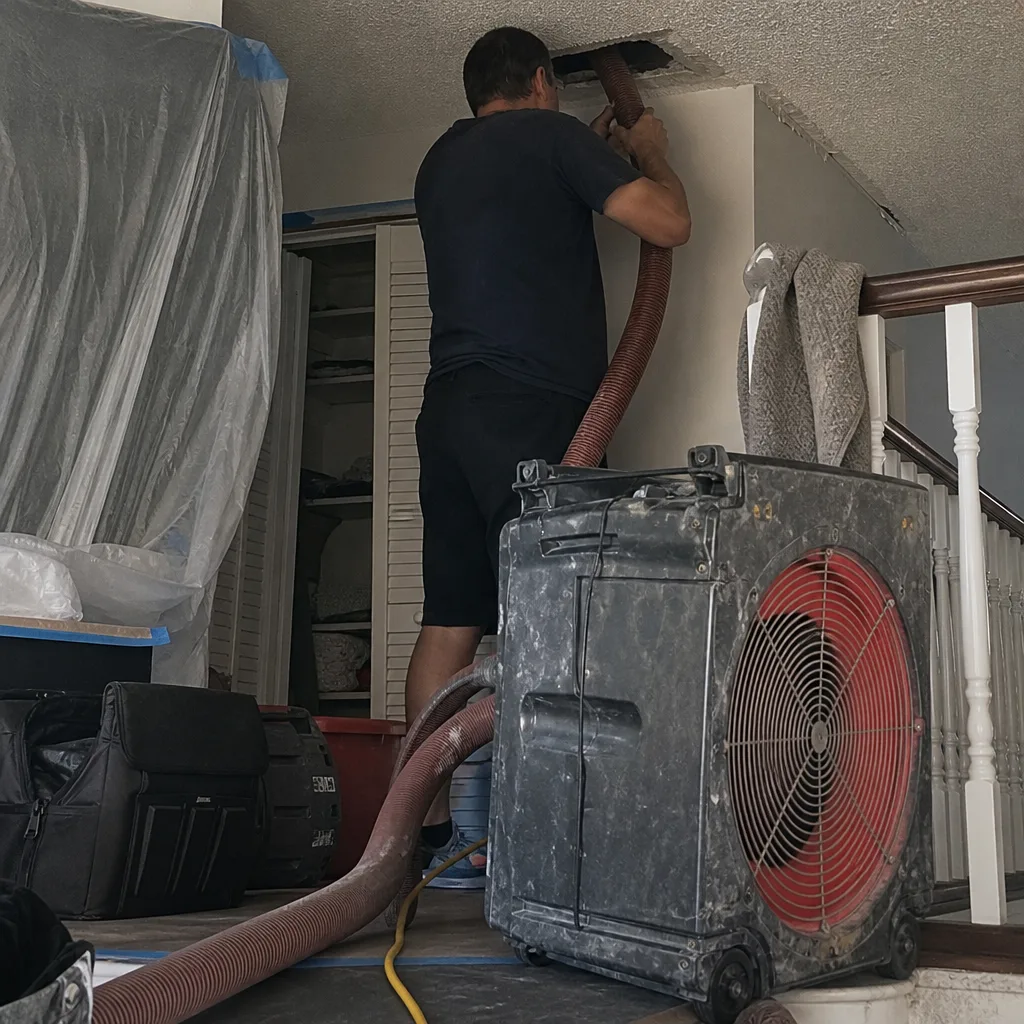
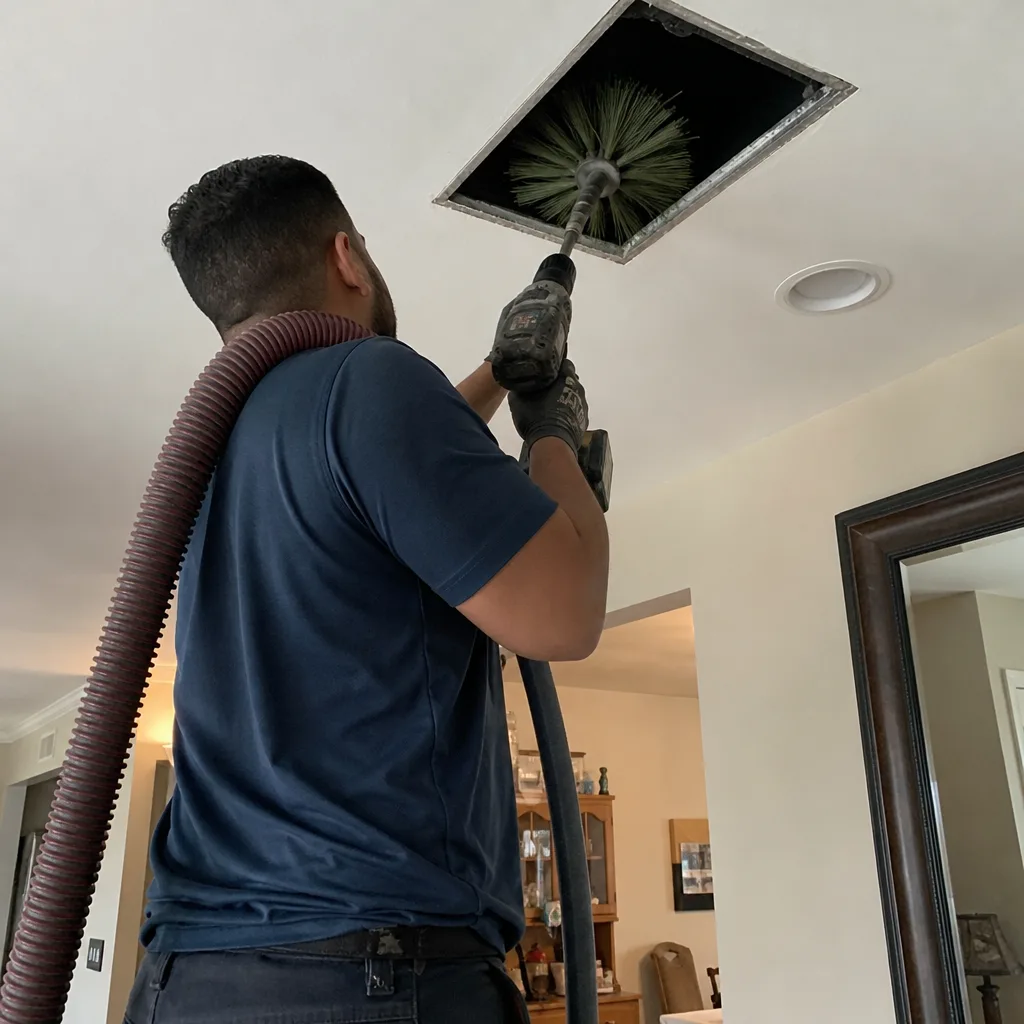
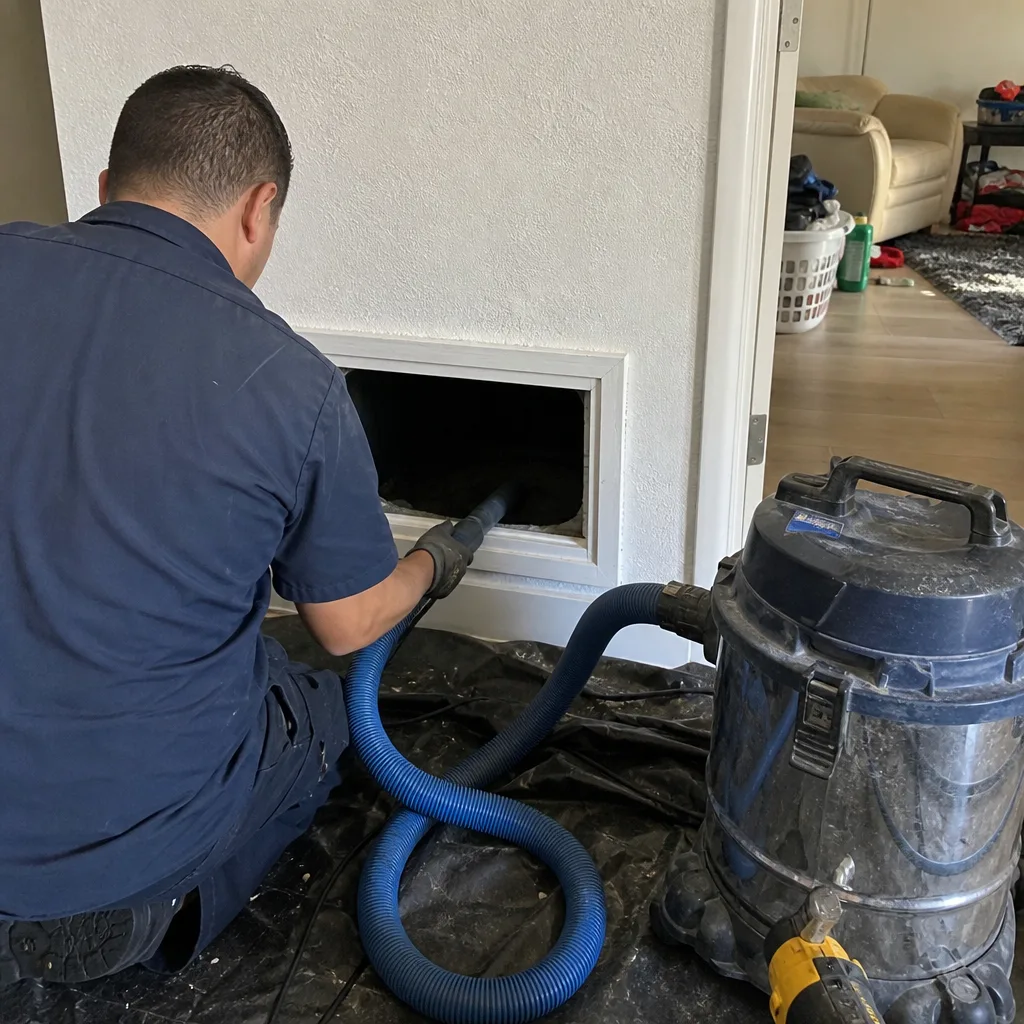
- Full-system cleaning: A real duct cleaning uses a negative-air machine, typically a Nikro or Abatement Technologies unit, that pulls the system under negative pressure while a rotary brush system (Rotobrush is the standard in our trucks) mechanically agitates debris off the duct walls. You cannot replicate this with a shop vac and a drill brush.
- Duct sealing: When flex duct seams fail or sheet metal joints separate, we use duct-sealing mastic and foil tape applied to code. Duct tape, the gray fabric tape, is not approved for ductwork and fails quickly in Florida’s attic heat. We explain what Duct Sealing in Fort Lauderdale involves and what it costs on our dedicated page.
- Coil cleaning: The evaporator coil sits in the air handler and gets caked with a biofilm of dust and moisture. Cleaning it properly requires safe access and a coil cleaner that won’t damage the fins. This is not a homeowner job, not if you want the system to keep working.
- Mold remediation or water-damaged duct replacement: If you see the black speckling pattern described earlier, the fix is not just cleaning the registers. The source of moisture has to be found and corrected, and affected duct runs may need replacement.
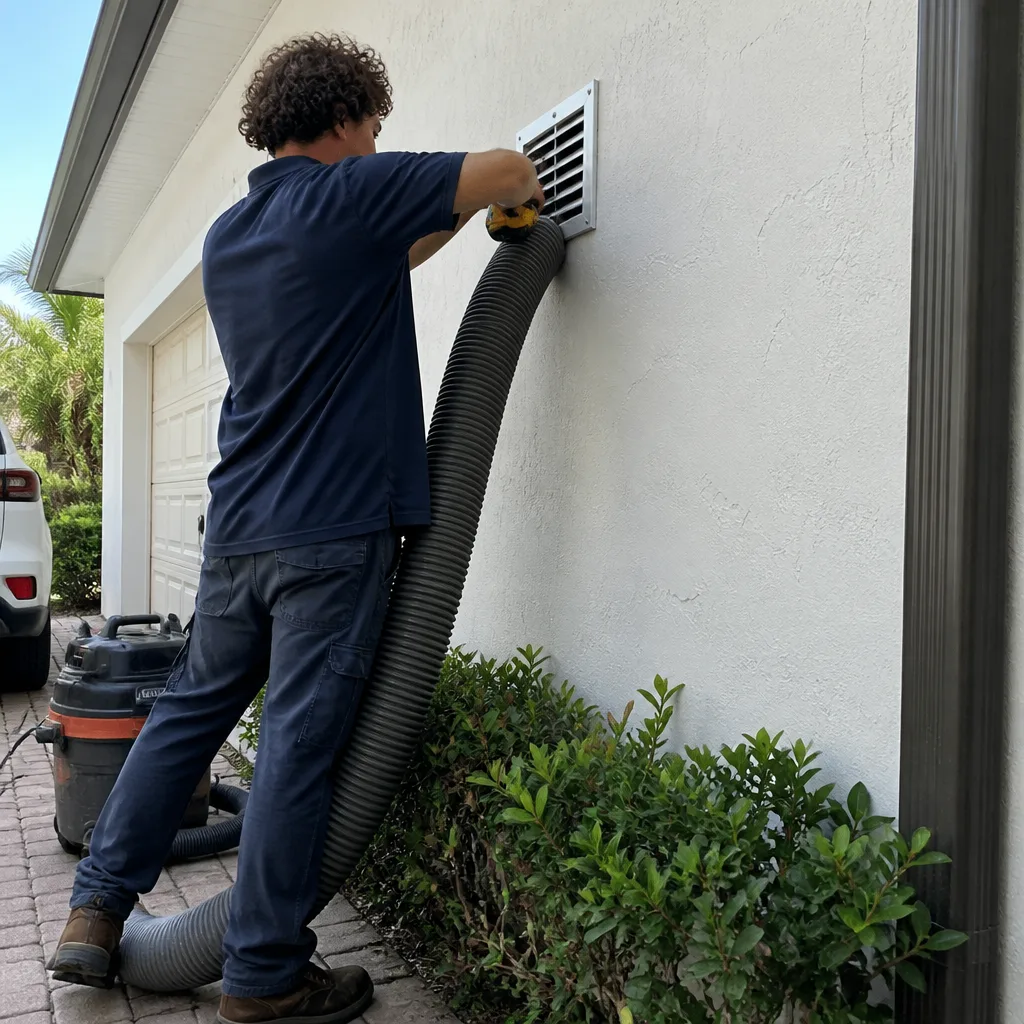
- Dryer vent cleaning: Lint buildup in the dryer vent is a fire hazard and a separate service from air duct cleaning. Our Dryer Vent Cleaning in Fort Lauderdale page covers the signs of a restricted vent and what a cleaning involves.
The threshold we give homeowners is simple: if you can see inside the register boot with a flashlight and identify specific buildup or staining, you’re monitoring. If the issue is beyond what you can see, beyond the first 6 to 8 inches of the duct run, or involves moisture, odor, or airflow, it’s time for an equipment-level assessment. In our experience, most Fort Lauderdale homes that have never had a professional cleaning need one by the time the first visible signs appear at the registers. What you can see at the register is usually the smallest part of what’s actually in the system.
Common Mistakes to Avoid
- Treating filter changes as a substitute for duct cleaning. A clean filter stops new particles from entering the system. It does nothing for what’s already coated on the duct walls. You’re protecting the intake, not cleaning the exhaust path.
- Relying on the “90-day filter” rule year-round in Fort Lauderdale. During the February-to-May and October-to-November pollen windows, a 90-day cycle means running a filter that’s been fully loaded for weeks. You’re paying for air that’s been through a plugged filter and may be pushing the blower beyond spec.
- Checking registers only in the rooms you use daily. Supply ducts to guest rooms, rarely used bathrooms, and second-floor spaces in homes with split systems can develop problems invisible from the living room. Walk every room monthly during wet season.
- Assuming a musty smell means the ducts are dirty. The odor usually means moisture somewhere: a drain pan, a coil, a leaking supply duct in the attic pulling humid air. Cleaning without fixing the moisture source is throwing money at a symptom.
- Judging a duct cleaning quote on price per vent. Companies that quote per vent build in pressure to add on. A healthy duct system in an average Fort Lauderdale home costs $330 to $620 to clean properly with professional negative-air equipment. If you’re quoted $89 for a “whole house” cleaning, ask what equipment they’re using and whether the price covers the full system.
- Skipping post-storm checks because the house looks dry. Wind-driven rain can enter a wall cavity or attic space and leave no visible trace for weeks. By the time you smell it, microbial growth is established. Check registers in the week after any storm that brought rain against the house.
- Not documenting anything. Two years of maintenance logs with photos is real leverage in an insurance claim and a real selling point in a transaction. It costs you 90 seconds per entry.
When to Call a Professional
Call a licensed duct professional when you see black or dark gray speckling at multiple registers, when a musty odor persists after a filter change, when airflow from one room is noticeably weaker than others, when you’ve had any water intrusion event, or when the system simply hasn’t been cleaned in three or more years. These are specific thresholds, not vague hunches. Hollis Air Duct Fort Lauderdale offers free estimates in Fort Lauderdale. Call (754) 354-3644 and describe what you’re seeing. We’ll tell you over the phone whether you need a cleaning, a sealing assessment, or a repair evaluation, and the price is written down before any work starts. You can also start with our Hollis Air Duct Fort Lauderdale home page for an overview of services and how we work.
Frequently Asked Questions
Air ducts should be cleaned every 24 to 36 months in Fort Lauderdale, with the shorter interval for homes with pets, smokers, coastal exposure, anyone with allergies or asthma, or homes that have endured water intrusion. The schedule is based on how fast dust, salt, and biological material accumulate in a humid coastal climate, not on a national average.
Air duct cleaning in Fort Lauderdale typically costs $330 to $620 for a complete single-family home system using professional negative-air equipment. The price for your home depends on system size, number of returns, accessibility, and current condition. At Hollis Air Duct Fort Lauderdale, the price is written down before work starts and does not move at the door. Call (754) 354-3644 for an exact quote.
Some duct cleaning quotes are dramatically cheaper because they don’t include full-system cleaning. The low price covers a few supply registers or a “blow and go” job that stirs up dust without removing it from the system using a negative-air machine. Compare the equipment listed on the quote, the scope of work, and whether the price covers the return, the supply, the plenums, and the main trunk line. A legitimate full-system cleaning with professional equipment starts around $330 in this market.
You know the duct cleaning was actually done because the company provides before-and-after photos of the main trunk line and plenums, and you can see visible improvement at registers throughout the house. We take photos on every job at Hollis Air Duct Fort Lauderdale because verification is part of the work, not an optional extra.
Yes. Dirty air ducts circulate accumulated pollen, dust, and fungal spores back into the living space every time the blower runs. In Fort Lauderdale, where the outdoor pollen load from melaleuca and Australian pine is already high, a dirty duct system means the inside of your home is compounding what you’re trying to escape outside. Cleaning the system and upgrading to a MERV-11 or MERV-13 filter is the combination that makes the biggest difference.
Duct cleaning before a sale is one of the highest-value maintenance items you can document. Buyers in Broward County increasingly ask for air system records, and a recent cleaning with before-and-after photos plus a filter change log answers the question before it becomes a negotiation point. It’s a small investment relative to the price of the home and the cost of a post-inspection repair credit.
The Bottom Line
Fort Lauderdale’s climate demands a maintenance approach built around moisture, salt, and pollen triggers, not a generic calendar. Inspect registers monthly during the wet season. Change filters every 45 to 60 days during pollen peaks. Document everything. Call a professional when you see specific warning signs: dark speckling at multiple registers, persistent musty odor after a filter change, airflow weak in one room, or any water intrusion event. A full professional cleaning every 24 to 36 months with before-and-after photos keeps the system honest and the air quality where it should be. This checklist gives you the thresholds and the schedule. When it’s time for the work itself, you know the standard to demand.
Contact Hollis Air Duct Fort Lauderdale
Ready to get your ducts inspected or cleaned? Call (754) 354-3644 for a free estimate. We answer the phone 24/7 with a live person, the price is written down before work starts, and every job is backed by our 365-Day Done Right Promise. If the work fails within a year, we come back and make it right at no charge. That’s the Garrison Standard, and it’s how we’ve operated in Fort Lauderdale since 2004.
Written by Roy Castellanos, Owner at Hollis Air Duct Fort Lauderdale, serving Fort Lauderdale since 2004.
See the difference
 Before
 After
After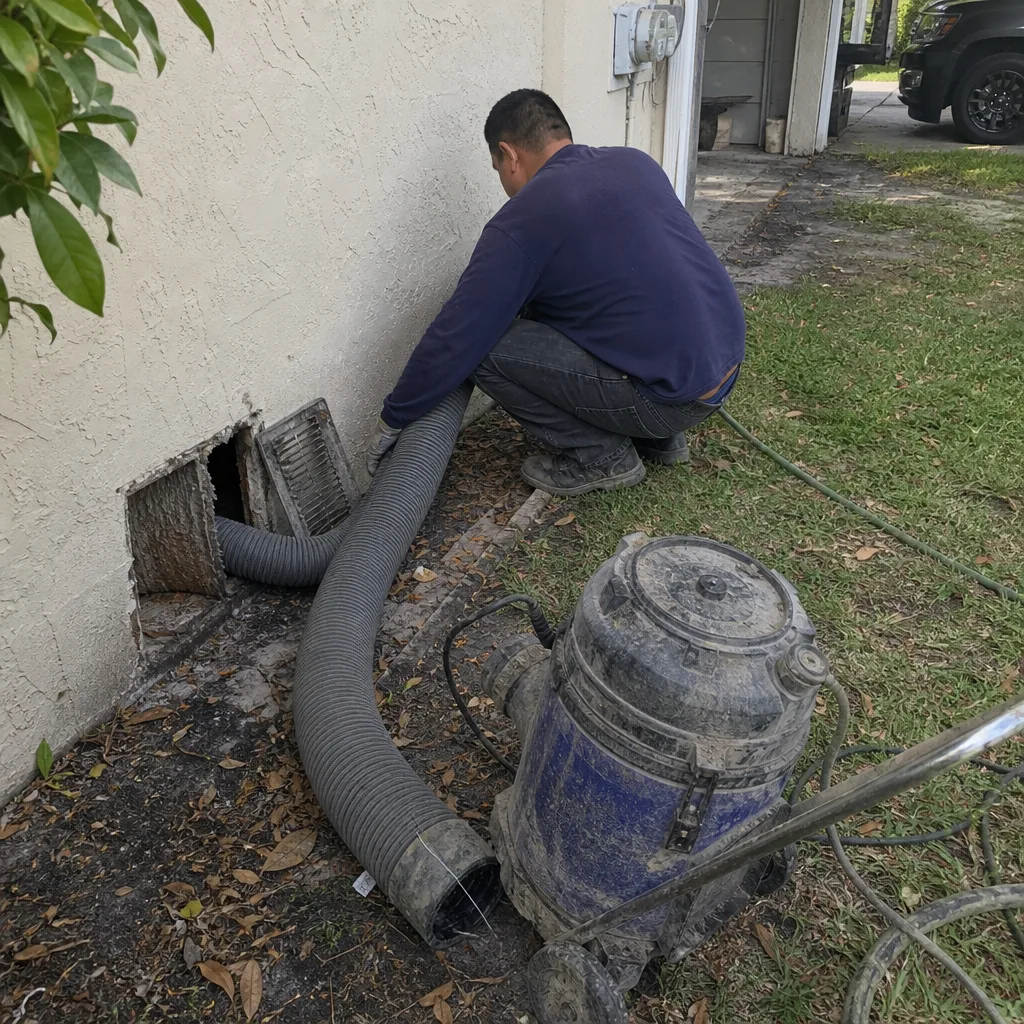 Before
 After
After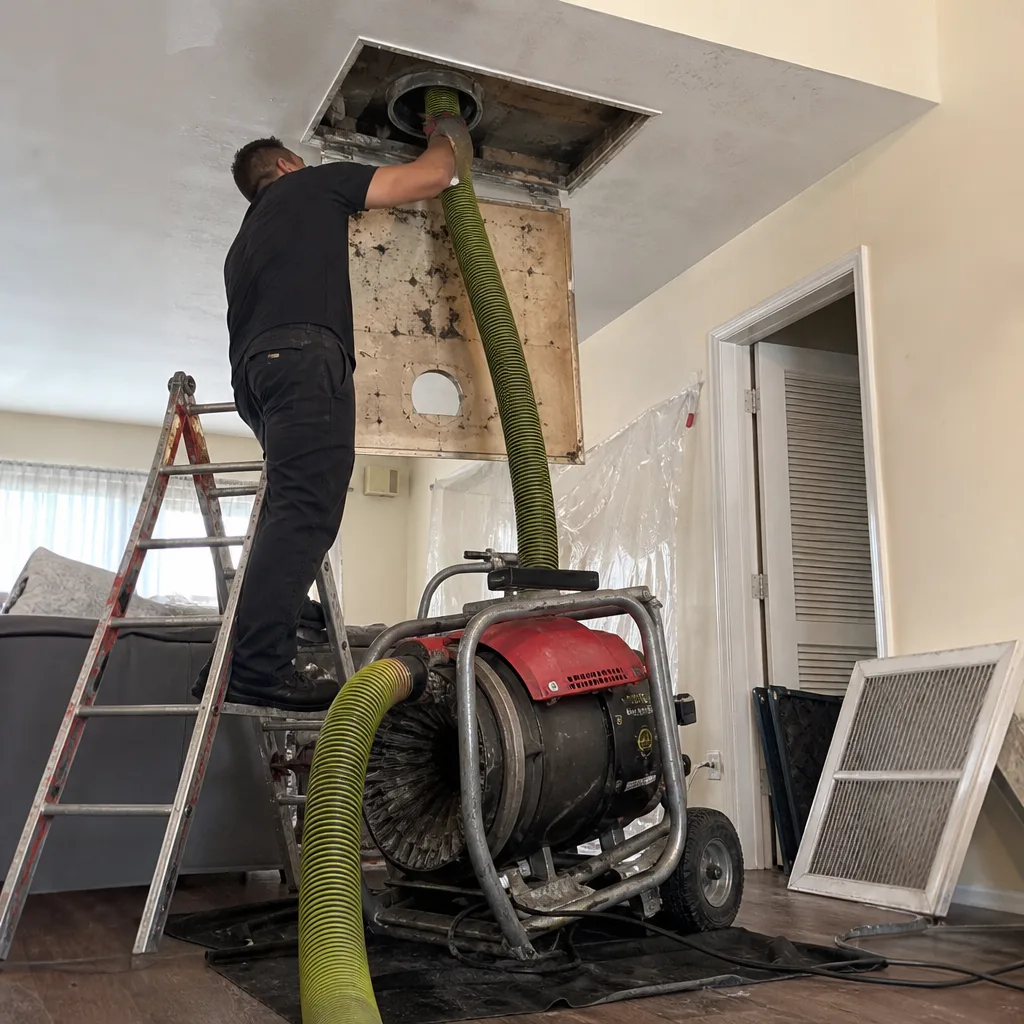 Before
 After
After